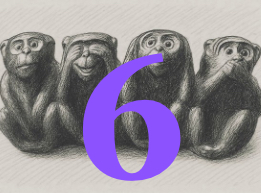
Gertrude Bell journeyed with her family through France, Switzerland, Italy, Austria, and Germany between 1893 and 1897, studying languages, culture, and geography along the way. Throughout this period, she continued active study of Persian, including translation work.
Her diary entries from these years record everyday details of travel—swimming in Alpine lakes, train journeys, afternoon teas, and lessons completed while abroad.
In 1894, her first published work, the travel memoir Persian Pictures, appeared, albeit under the pseudonym of an anonymous author. She followed this in 1897 with Poems from the Divan of Hafiz, a Persian-to-English translation.
Transit & Spectacle
On 29 December 1897, Gertrude was en route from Southampton to Japan; first by transatlantic ship, then by train across the isthmus of Panama, and finally by the S.S. City of Para for the rest of the journey to San Francisco. She noted in a letter to their father that brother Maurice procured a book called Manners of Women, intending to use their long, nearly X journey to instill some traditionally feminine lessons in his older sister and maybe actually get her to mend a shirt or two of his. [1] Gertrude seems to have seen no harm in his hoping. However, she made no mention of any domestic sciences intermixed between her readings and Arabic and Japanese lessons.
Across this journey, a series of passages offer an early glimpse of the worldview that would later shape Bell’s engagement with empire, where cultural curiosity coexisted with deeply embedded racial hierarchies. Bell’s diary entry employs racial language typical of late-Victorian imperial writing but deeply offensive today:
“people in top hats and suits of dittos, shopkeepers, beggars, loiterers, divers[?] sweetmeat sellers, all in a hurry, all obviously doing nothing, and all as black as night. The whole town smelt of n***.” [2]
Anchored outside Acapulco, Gertrude noted the USS Marietta. This gunboat would soon make the voyage around Cape Horn as part of the rapid redeployment of U.S. naval forces to the Caribbean at the outset of the Spanish–American War, still two weeks away at the time.
Gertrude’s diary consistently demonstrates a keen eye for observation. In San Francisco, she records architecture, food, clothing, and the city’s movement. Yet the people she encounters rarely appear as individuals. The siblings hired an ex-police officer as a guide through Chinatown, who boasted that no one in the city had sent more Chinese men to the gallows than he. The people Bell witnessed there are mainly presented as spectacle—opium smokers, “China men,” or women kept in debt bondage, dressed and displayed for hire. [3] In this way, her observations of Chinatown differ little in tone from her descriptions of harbor seals on the docks: both become scenes to be viewed rather than communities to be understood.
After only a few days, Bell was westward bound again. A brief stop in Oʻahu found the siblings renting a carriage to drive to the Nuʻuanu Pali lookout. Gertrude would learn of the sinking of the USS Maine upon her arrival in Japan in early March. There, she ordered numerous items of clothing—perhaps, at last, ensuring that her brother’s shirts were properly mended.
Japan: Aesthetic Distance
While in Japan, Gertrude visited shogunal tombs, the shrine to Tokugawa Ieyasu, Buddhist and Shinto temples, and Sengakuji Temple, home to the graves of the Forty-seven Rōnin. Yet throughout these visits, she repeatedly described the surrounding roads simply as “Jap streets.” The phrasing suggests a habit of marking difference even within Japan itself, reflecting how, as a daughter of the empire, she maintained distance from unfamiliar societies when moving beyond a European cultural frame. Language aside, however, she did gush to Dame Florence about “the joy of all those little shops” found along those same streets. [4]
Gertrude remains an ensconced outsider in a land she traveled around the world to see. Twice she refers to men clad in blue winter attire as “blue gnomes,” while describing a rickshaw driver as wearing a “mushroom” atop his head. Only fellow Westerners are ever mentioned by name. These figures in motion become elements of scenery in her travels. What appears here is subtler than the overt racism evident in her Barbados writings. Rather than blunt dehumanization, Bell renders the Japanese people she encounters as whimsical, decorative figures. In this way, difference is flattened into aesthetics.
I would argue that this form of othering reflects a less-examined side of tourism, where difference is consumed aesthetically rather than understood. In contrast, Mary (Crawford) Fraser’s Letters from Japan: A Record of Modern Life in the Island Empire reflects a more sustained engagement with Japanese society. Her writing shows a genuine appreciation for cultural differences without resorting to negative or diminishing comparisons.
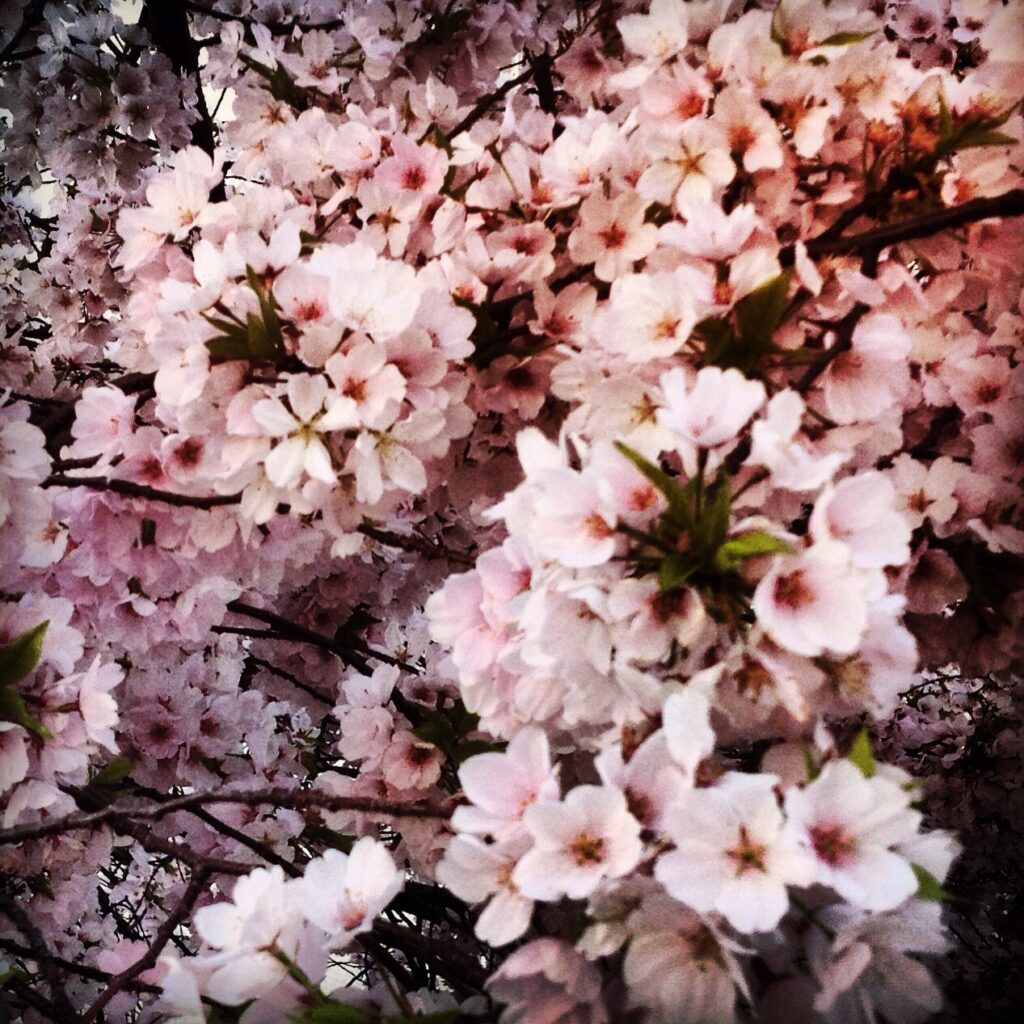
Crawford, the wife of a diplomat, arrived in Japan in April 1898, missing the cherry blossom season witnessed by the Bell siblings. Her diplomatic passport allowed her to remain in Japan beyond the standard Meiji-era visitor’s limit, effectively functioning as a visa, whereas travelers such as the Bells were restricted to stays of no more than three months.
Bell’s perspective is perhaps most clearly distilled in a brief social observation near the end of her time in Japan:
“Maurice and I went up to Tokyo and lunched with Captain Brinkly, so funny to see his Jap wife at the head of the table, not able to speak a word of English.” [5]
China: Empire Spoken Aloud
On April 26th, the party departed Japan to continue their journey west. Bell’s visit to China was markedly different from that to Japan, not least for the shortness of the stopover. One of the first events of the mainland involved passing execution ground where the guide, an individual known as Ah Cum, offered to bring forward a decapitated head brought for their viewing. Gertrude heard rumors that the United States wanted to sell the Philippines to Britain, even though the U.S. had only just recently militarily seized the latter islands as part of the Spanish-American War.
After a social engagement at this time, she records the meal discussion of partitioning China into imperial zones: Britain and Russia in Manchuria, Germany and France advancing from Indochina, and Japan. The fate of an entire civilization is treated as a strategic problem, noted by Bell as a casual dinner conversation.
By the late nineteenth century, imperialism had reached a particularly aggressive and unapologetic phase, marked by territorial expansion, racial hierarchy, and the routine discussion of partition.[6] In China, this period is remembered as the Century of Humiliation, and the historical lessons drawn from foreign imperialist incursions during these ninety years remain central to the foundation narrative of the modern Chinese state.
Passage and Closure
The rest of their journey to Port Said, at the northern end of the Suez Canal, went without incident.
The Bell siblings arrived in Alexandria, Egypt, by 1 June and were soon off to Cairo for a packed schedule of sights, from the Pyramids of Giza to the Khan el-Khalili bazaar. Then they were on to the blue waters of the Mediterranean, Constantinople-bound, where they officially ended the portion of the journey by water.
Conclusion
By the 1890s, affluent families like the Bells traveled at the height of Western imperial power, when wealth, British nationality, and global infrastructure combined to make movement unusually frictionless. Passports and introductions functioned less as permissions than as guarantees, opening access to protected routes and spaces that were inaccessible—or dangerous—to others.
Maurice Bell’s easy access to British men’s clubs and the family’s encounter with a functioning polo ground during their stopovers in Japan and China were not incidental comforts. They marked the presence of a fully transplanted British social world abroad, complete with its hierarchies, rituals, and exclusions. Though Gertrude Bell herself remained barred from male-only institutions, their existence formed part of the informal imperial infrastructure that made her travel safer, smoother, and more legible within foreign spaces. Empire here was not an abstraction of policy, but a daily lived system of access.
As the nineteenth century drew to a close, Bell moved through a world structured by geopolitics, class, religion, gender, and race. For someone of her wealth, nationality, and family support, nearly all of these hierarchies aligned in her favor. Gender posed the primary limitation, but even this constraint was softened by inherited social gains and a permissive elite culture that allowed select women to move as exceptions.
Bell appears to have had few objections to prevailing expectations of “womanly duties,” even when reminded of them by her brother. These norms were not rejected as unjust; they remained intact for most women. Bell’s independence did not challenge hierarchy so much as reveal how selectively it could be bypassed.
Notes & Citations
[1] Gertrude Bell to Sir Thomas Hugh Lowthian Bell, 29 December 1897, GB/1/1/2/1/4/6, Gertrude Bell Archive, Newcastle University Library.
[2] Gertrude Bell, diary entry, 11 January 1898, GB/2/6/2/1/11, Gertrude Bell Archive, Newcastle University Library.
[3] Gertrude Bell, diary entry, 9 February 1898, GB/2/6/2/2/9, Gertrude Bell Archive, Newcastle University Library.
[4] Gertrude Bell, letter to Dame Florence Eveleen Eleanore Bell, 8–13 March 1898, GB/1/1/1/1/8/2, Gertrude Bell Archive, Newcastle University Library.
[5] Gertrude Bell, diary entry, 18 March 1898, GB/2/6/2/3/18, Gertrude Bell Archive, Newcastle University Library.
[6] Gertrude Bell, diary entry, 5 May 1898, GB/2/6/2/5/5, Gertrude Bell Archive, Newcastle University Library.
Amid growing anti-foreign resentment fueled by missionary expansion, extraterritorial privileges, and economic intrusion. These tensions would erupt two years later during the Boxer Uprising and the subsequent siege and looting of Beijing by Western powers and Japan (1900). This episode remains central to Chinese historical memory.
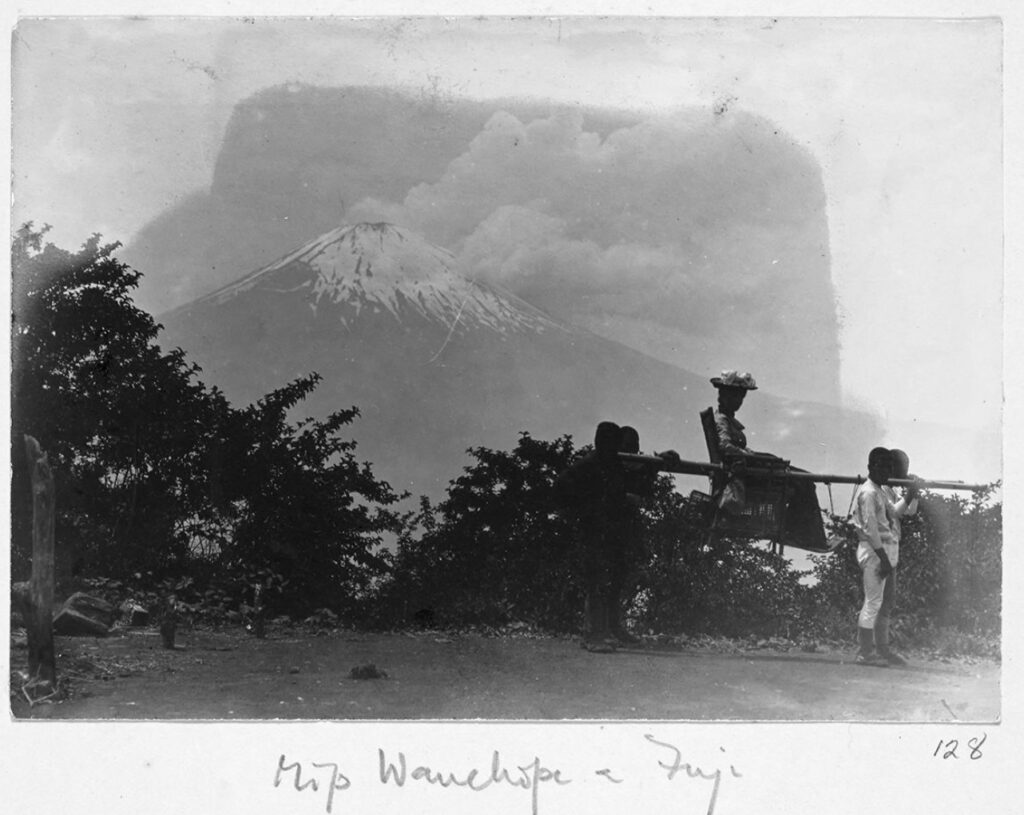
[7] Gertrude Bell, Miss Wanchope and Fuji, photograph taken 9 June 1903, GB/3/2/4/128, Gertrude Bell Archive, Newcastle University Library, Creative Commons Attribution-ShareAlike 4.0.
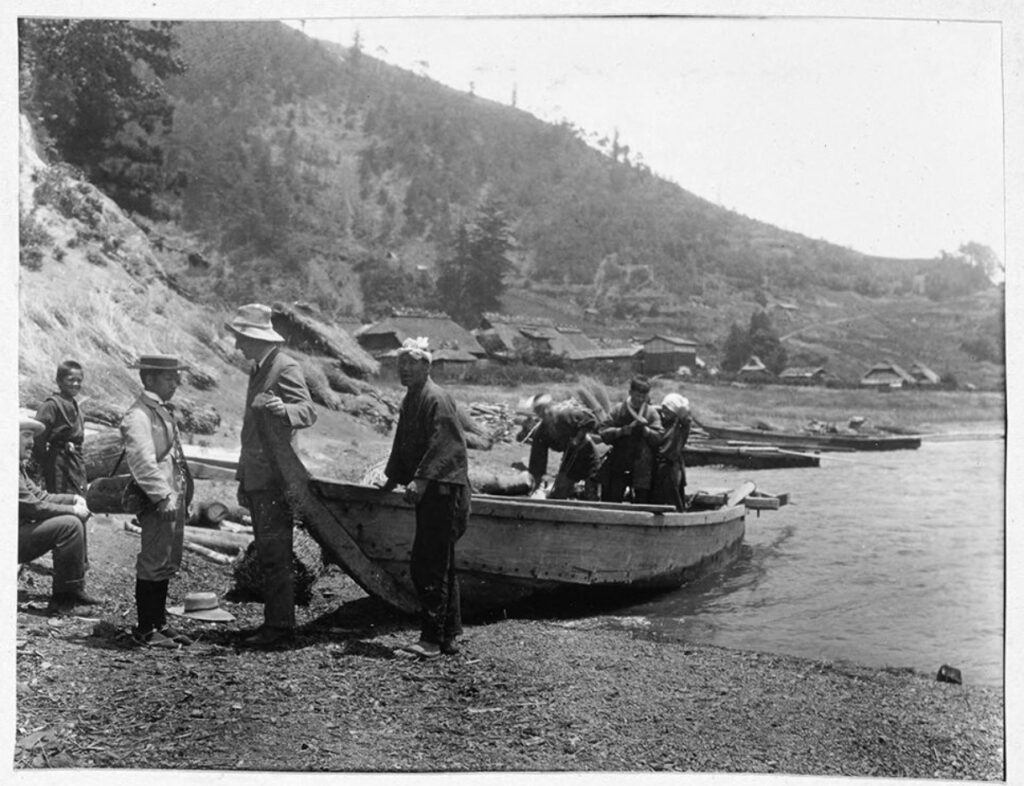
[8] Gertrude Bell, Photograph taken in Japan, June 1903, GB/3/2/4/99, Gertrude Bell Archive, Newcastle University Library, Creative Commons Attribution-ShareAlike 4.0.
For readers who wish to follow ongoing research, subscription is available in the footer.