Traders in the Ohio River Valley lived between two modes: some embedded themselves in Native villages, taking wives, speaking the language, and becoming fixtures in the seasonal economy. Others came twice a year, arriving with the spring thaw or before the autumn hunts, their packs stuffed with powder, lead, cloth, and a handful of gaudy toys meant to charm children and win easy goodwill. Rum was ever present, shipped in barrels with the tacit understanding that it would be watered down on arrival, stretching profits while deepening dependence.[1] In either form, the trader was less a neutral merchant than a cultural intersection, balancing necessity against exploitation.
The Ohio Valley was more than contested ground — it was a marketplace of staggering potential. Fort Pitt sat at the keystone of the interior, funneling every convoy of trade goods into the interior and every pack of furs back toward Philadelphia. Here, ordinary items from the Atlantic world — rum, cloth, lace shirts, even silk handkerchiefs — could be sold at enormous markups, traded for the pelts that underwrote the entire frontier economy. Animal skins moved like currency, accepted in place of coin, tallying debts, and binding Native hunters to traders through webs of credit. There was money to be made in abundance, but the profits came at a cost: the relentless labor of Native families, the ecological toll of over trapping, and the shadow of slavery that accompanied the fur trade into the west.
The Warts of Imperial Economics
Trade and economic history always carries its warts. Karl Marx once said all history was economic, and while historical materialism isn’t for everyone, the point still stands: profit has always come with a cost. In our own age, we talk about blood diamonds, sweatshops, or illegally gained money hidden in offshore accounts. In the eighteenth century, the equivalents were tea exported from economically shackled India, enslaved human beings sold as property, and wildlife eradicated to feed European fashions. The beaver trade in the Ohio Valley belonged to that same story—a system that produced wealth and connection, but only by burning through lives, lands, and animals.
Nothing in economics was ever stand alone. The Ohio Valley’s beaver trade was not an isolated frontier barter system; it was tied into the same global economy that moved sugar from the Caribbean, tea from India, and human beings from Africa. Furs taken by Native hunters in the Ohio country could be bundled into bales, sold in Philadelphia, shipped to London, and there converted into credit that financed slaving voyages. Slave ships financed by beaver pelts sailed from London and Philadelphia to the Caribbean. They returned laden with sugar, molasses, coffee, and rum—plantation products made by enslaved hands, which then circulated back into the same frontier markets where furs, skins, and wampum passed as currency. Each ledger entry at Fort Pitt belonged to this broader chain, where commodities were interchangeable and profit was extracted by burning through lives, lands, and resources.
One account from 1768 put the exchange in stark, brutal terms: “If you take 4 negros the price is 12 cattle a piece, or 200 otters, 450 beavers, or 1700 raccoons.”[2] In this arithmetic of empire, human beings were reduced to the same trade units as animals and pelts. The quote is jarring, but it illustrates the logic of an economy that treated people, creatures, and commodities as interchangeable equivalents on a balance sheet.
King Beaver
By the 1770s, the beaver had long been king. A century earlier, the so called Beaver Wars saw Native nations clash for control of the fur trade, wars that ultimately left the Haudenosaunee (Iroquois) ascendant. The Shawnee were among those pushed west in the aftermath, and the hierarchy it created still echoed decades later.
As noted in my previous posts, “Half-King” Tanaghrisson and Scarouady were Haudenosaunee representatives in the Ohio Country, with Scarouady in particular often speaking for the Shawnee—an arrangement born from the shifting balance of power forged in the beaver’s shadow.

By the 1770s, beavers were already trapped to scarcity east of the mountains. The Ohio Valley still yielded pelts, but numbers were dwindling, pushing Native hunters and traders alike to press farther west in search of fresh grounds. As the supply thinned, Native hunters fell deeper into debt with traders, and the strain of that imbalance fueled resentments that erupted in conflicts like Pontiac’s War and later Shawnee resistance to colonial encroachment
By the late 1760s, hunters like Daniel Boone were already pushing into Kentucky on “long hunts,” disappearing for months in search of pelts and hides. Beaver was thinning in the Ohio Valley, but Kentucky’s game rich lands promised new profits—especially in deer hides, which fed European demand for buckskin. For Boone and his companions, the frontier was an economic opportunity, but for Native nations it was trespass. Kentucky was still a Shawnee and Cherokee hunting ground, and each intrusion deepened tensions.
To What End?
What became of all those Ohio Valley beaver pelts? Packed into bales, they moved east to Philadelphia and across the Atlantic to London, where hatters turned the soft underfur into felt. The best hats of the eighteenth century were made with that fine underfur; they were the badge of gentility—worn by merchants, lawyers, and politicians. In that sense, the animals trapped by Shawnee and Delaware hunters ended their journey not on the Ohio but on the heads of gentlemen in London coffeehouses. The demand for hats drove the frontier economy, linking cabins at Logstown to counting houses on Lombard Street.
Beaver fur was a mark of wealth long before Europeans crossed the Atlantic. In Chaucer’s fourteenth-century Canterbury Tales, the Merchant wears a “Flaundrish bever hat,” a sign of affluence and good taste. Such hats were prized because beaver felt was dense, waterproof, and kept its shape far better than wool. But by the seventeenth century, Europe’s own beaver populations had been trapped to near extinction. The fashion survived, but the animal itself had to be sourced abroad—making North America’s rivers, especially the Ohio, vital to the global economy.
As hunters pressed further afield and pelts flowed back through Fort Pitt, the town’s role as the hinge of empire only deepened. Whoever controlled the stores at Pittsburgh controlled the movement of goods into Shawnee country and the return of furs eastward. By the early 1770s, many families and firms had become dominant in this trade. At London sales, a worn “castor gras” pelt could fetch 8–10 shillings compared to 4–5 shillings for a fresh “castor sec.” Traders at Fort Pitt used similar distinctions, pricing worn skins at nearly double fresh ones and counting bandeau strips only as fractions of a pelt.[3]
Additionally, castoreum, a secretion from beavers used to mark their territory, was also in demand. Castoreum allowed other scents, like those of flowers and other perfumed aromas, to last on the wearer’s skin. It was even used in medicine, alongside other now obsolete treatments like mercury and leeches.
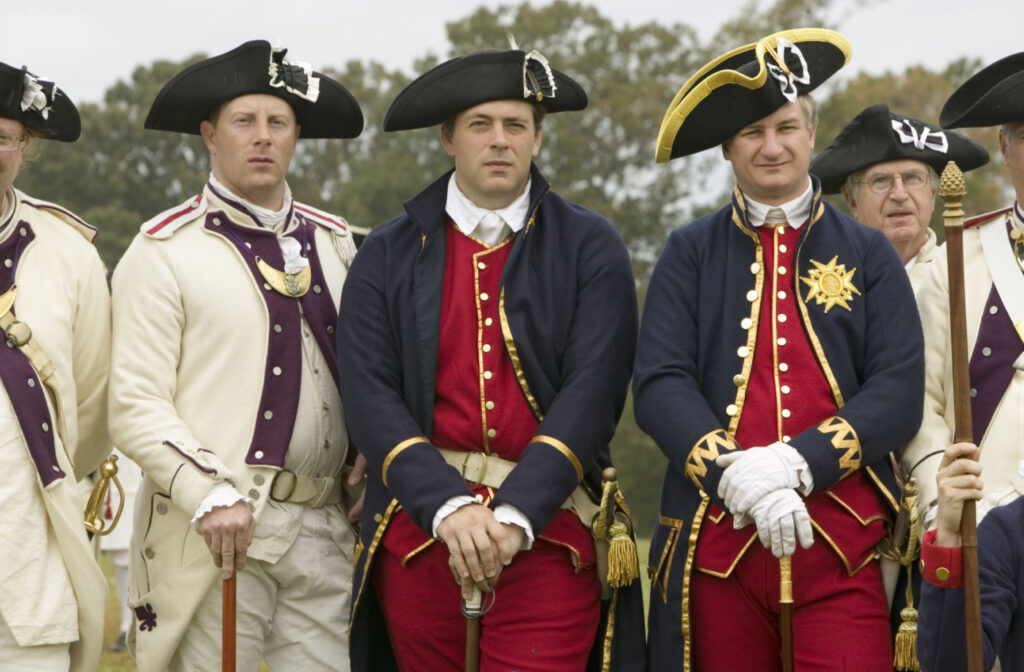
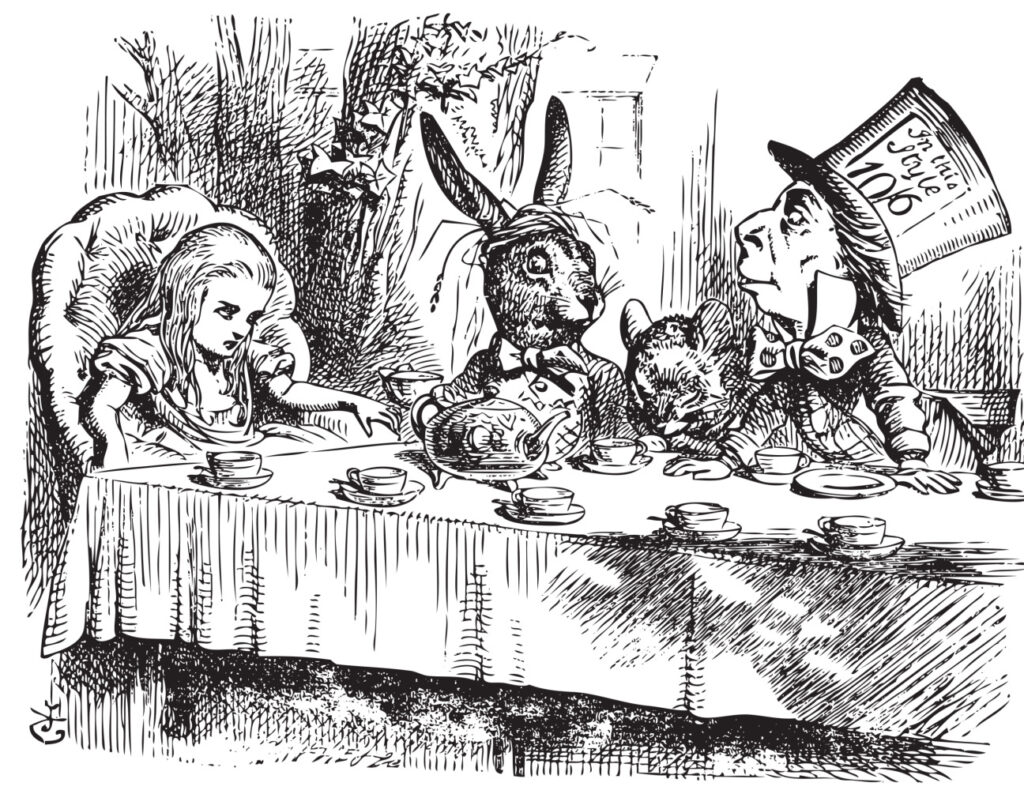
Tricorn hats were standard issue in British military dress, but not all were equal. Officers and wealthy merchants might afford pure beaver felt, prized for its durability and water resistance. For ordinary soldiers and middling consumers, the more affordable demi-castor—a blend of beaver with wool or rabbit fur, treated with mercury nitrate—offered a cheaper alternative that mimicked the look without the same longevity. The heavy use of mercury in this process gave rise to the phrase “mad as a hatter,” a nod to the trembling hands and damaged minds of hatters slowly poisoned by their craft.
Extinction for Adornment
For those thinking, “wait—the beaver was driven to near extinction in North America, and wiped out in much of Europe, all for hats,” let me stress that this was far from unique. The hat trade and related fashions nearly erased the European beaver, devastated the sea otter and fur seal, and even helped drive the great auk to extinction
And then there were the flighted birds. The Carolina parakeet—the only native parrot of the eastern United States—was hunted for its bright plumage, destined for ladies’ hats in the nineteenth century. Passenger pigeons, snowy egrets, and even the iridescent Birds of Paradise all fed the same insatiable trade in feathers and fashion. If beavers supplied the felt of hats, birds supplied the plumes, and together they paid the price for Europe’s and America’s appetite for adornment.
Ultimately, the beaver’s fate reveals the costs of empire: lives commodified, lands exhausted, and species driven to the edge. But behind the ledgers and the pelts were men and women — traders, interpreters, and families — who navigated this economy day by day. Their stories and the relationships they formed, beginning with John Gibson and the Butler brothers, are the subject of the first post of Part II.

Notes and Citations
[1] Leland D. Baldwin, Pittsburgh: The Story of a City (Pittsburgh: University of Pittsburgh Press, 1937), 9.
[2] Baynton, Wharton & Morgan Papers, Roll 2238, frame 880, Pennsylvania State Archives (Harrisburg).
[3] E.E. Rich, The History of the Hudson’s Bay Company, 1670–1870, vol. 1 (London: Hudson’s Bay Record Society, 1958), 348–52; James C. King, “Indian Credit as a Source of Friction in the Colonial Fur Trade,” Western Pennsylvania Historical Magazine 49 (1966): 62–64.
For readers who wish to follow ongoing research, subscription is available in the footer.