
In the years before the American Revolution, colonial officials imagined the frontier as a place that could be organized on paper long before anyone set foot upon it. Land became currency; the backcountry, a blank check. Governors awarded vast tracts to patrons and speculators, convinced that order could be imposed from above through surveys, charters, and signatures. But this vision was always more fantasy than fact. The reality waiting beyond the Blue Ridge was a world where paper meant little, authority thinned to a thread, and belonging was determined not by title but by presence, labor, and risk.
Patronage and the Illusion of Order
In 1734, the colony of Virginia extended its claims beyond the Blue Ridge Mountains, adding tens of thousands of acres to its domain. Governor Robert Dinwiddie championed a land-grant system that concentrated vast frontier tracts in the hands of elite families—the Fairfaxes, Beverleys, Carters, and others. The premise was simple: these magnates would subdivide their enormous holdings and resell smaller parcels to settlers who lacked the wealth or political connections to secure grants on their own. In practice, the arrangement created a top-down model of settlement, in which recipients of large grants dictated the terms under which poorer families occupied the land.
Once Lord Fairfax granted or sold a tract of land from his Northern Neck Proprietary, the new owner had two main options: sell the land outright for a one-time profit or lease it to tenants for income. This resembled the English landlord system, but in Virginia it was looser—tenants often had the option to buy, and the fluid land market made outright ownership the ultimate goal.
On the eighteenth-century frontier, it was never just hard work that secured land—it was connections. The very map shows how deeply power and patronage shaped settlement. Frederick County, VA, Frederick, MD, and Fredericksburg, VA, all honored Frederick, Prince of Wales, the heir apparent and father of George III. Cumberland, Maryland, was named in honor of his brother, the Duke of Cumberland. Spotsylvania nodded to Governor Alexander Spotswood, who forced Virginia’s expansion west. Other counties immortalized governors and grandees: Botetourt and Berkeley for Lord Botetourt, Fauquier for Francis Fauquier, Dinwiddie for Robert Dinwiddie, and Loudoun for the Earl of Loudoun. Each name was less a neutral label than a signpost of who had the power to open—or close—the door to land, and settlers knew that currying favor with patrons mattered as much as clearing a field.
The Washingtons were the sons of a modest but well-established member of the Virginia gentry. Their ability to secure valuable tracts, such as Charles Washington’s purchase in Berkeley County (later Charles Town, WV), was strengthened by Lawrence Washington’s marriage into the Fairfax family, which tied all the brothers to William Fairfax, Lord Fairfax’s cousin and land agent. It was through this connection that Fairfax employed the young George Washington as a surveyor in the Northern Neck, a start that not only acquainted him with frontier landholding but also positioned him to represent the Ohio Company in its dealings against the French.
The Hidden Costs of Belonging
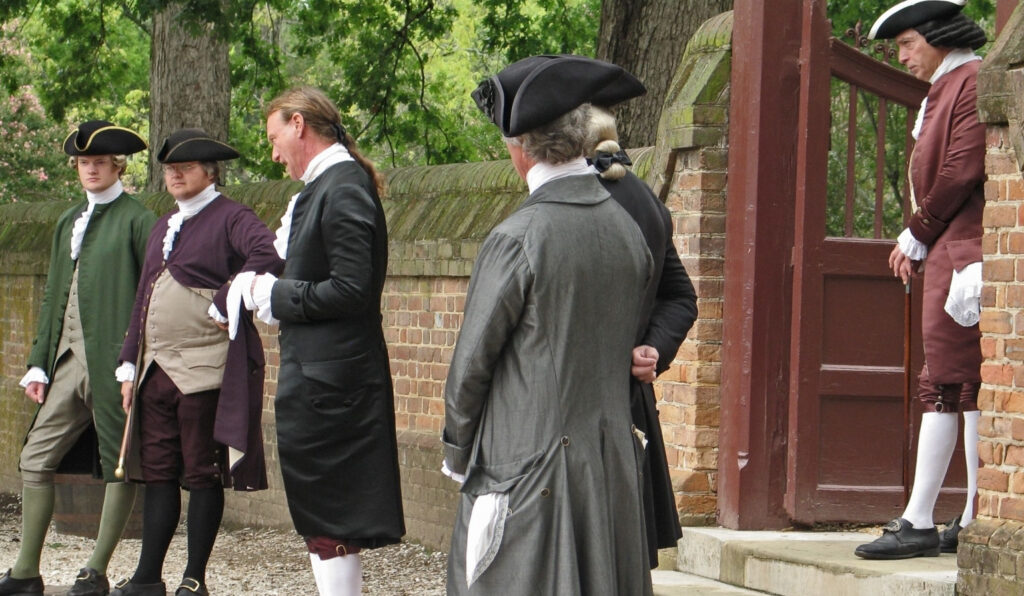
East of the Blue Ridge, colonial order wasn’t left to chance—it was written into law. Town charters laid out not only where people could build, but also what their homes said about them. Requirements for brick walls, cellars, and chimneys weren’t just about fire safety; they were about class. To keep a lot, you had to prove you could afford permanence.
Town charters were legislative acts passed before a town was ever built. Each charter defined its acreage, appointed trustees to oversee development, and prescribed the size, materials, and placement of buildings, streets, and public areas. Chartered towns were established by law rather than necessity—planned, mapped by surveyors, and sanctioned by the colonial assembly to project English order. They were meant to create orderly trade centers and seats of government that embodied civility and permanence.
Unchartered settlements, by contrast, grew from habit and opportunity: mill villages, ferry crossings, and trading posts founded by Germans, Scots-Irish, and other dissenters who distrusted state oversight. Communal agreements and church based covenants often dictated building requirements in these towns. Otherwise, rules were local—shaped by neighbors, courts, churches, and circumstance, where chartered towns legislated order, unchartered ones negotiated it.
Charter records reveal much about the cost of belonging in colonial America. Virginia’s capital for most of the eighteenth century, Williamsburg’s 1699 Building Act made expectations plain. Anyone who bought two lots on Duke of Gloucester Street had to build within two years—either a wooden house fifty by twenty feet, or a smaller forty-by-twenty-foot house with two brick chimneys and a brick-lined cellar. Each lot had to be fenced within six months; otherwise, the owner would be fined five shillings per month.[1] It was a system that rewarded capital and punished transiency. Other Virginia towns followed a similar model. Lewisburg (modern VA), Kinsale, and Kempsville (modern Virginia Beach) all required a “house fit for habitation,” complete with a stone or brick chimney, within three or four years of purchase.[2] Poorer settlers, those who built quick, wood-framed chimneys packed with clay, known as “cat-and-clay,” were effectively written out of these towns before they began.
Trustees, drawn from the local elite and named in the Charter, ensured that requirements were followed. They were empowered to evict neighbors who failed to meet building codes and to decide who was allowed to purchase property. Property did not circulate freely in chartered towns. No one could simply buy a neighbor’s house and move in without approval. Ownership itself was conditional, a privilege curated by class, language, and connection. Every transaction required the trustees’ blessing—the sanction of the town’s gatekeepers—who determined which buyers were “fit” to own a lot. Fit often meant English-speaking, Anglican, and financially secure—not German, Irish, Catholic, or otherwise “othered.” Ultimately, in enforcing the Charter, trustees shaped each community in their own image.
A brick chimney was no small investment. In 1777, Williamsburg tavernkeeper Jane Vobe paid fifteen shillings per thousand bricks and one shilling per bushel of lime. The labor cost—about six shillings per thousand for bricklaying—matched the daily rate of a skilled tradesman. Even a modest single-flue chimney required roughly two thousand bricks, while the end stacks of a larger house might use five thousand or more. By the time the mortar dried, a single chimney could cost between £2 14s and £6 15s (s = shillings, twenty to the pound), depending on size and finish. [3] That was several months’ pay for a skilled worker—proof that brick was the marker of class. It signified permanence, wealth, and belonging in a world where most people lived in wood.
It was a quiet form of control. Like a homeowners’ association two centuries early, these acts dictated materials, size, and deadlines, but in reality, it was more like redlining. The purpose wasn’t just aesthetic uniformity; it was social signaling. Only those who could afford to meet the community’s municipal codes would live within its domain. The laws claimed to prevent fire, and no one could argue with the need for that. Fire was an ever-present danger in towns of the period. At face value, brick over wood could be readily accepted as purely a fire-protection guideline. Yet both of Williamsburg’s proudest brick buildings—the Governor’s Palace (1781) and the Capitol (1747)—burned anyway. According to multiple witnesses, when the palace burned, the flames were so intense that the heat could be felt from Duke of Gloucester Street, and the glow was visible for miles.[4]
The message was clear enough: despite the very real danger of fire, permanence was a performance. Brick didn’t so much protect as price most people out. In the colony’s chartered towns, class was codified in brick and written into the landscape.
The Spread and Collapse of Anglicized Order
The laws that structured Virginia’s—and other colonies’—towns did not stop at their borders. As elites carried their ideals of order into the backcountry, the same logic—class, improvement, and control—followed them west.
William Bartlett leased property in Berkeley County (now West Virginia) from George Washington for £6 a year. The contract required him to plant orchards of one hundred winter apple and one hundred peach trees—an example of how colonial land agreements tied agricultural “improvement” to the right of occupancy.[5] In addition to the yearly rent, Bartlett was obligated to make further improvements to the property. In colonial leases like his, improvement wasn’t optional; it was the condition of belonging.
Long after Bartlett’s death, when his widow released the property back to Washington’s local land manager, the record noted that Bartlett’s “dwelling house according to the dimentions has been built, also a well of good water, some peach trees have been planted, and about four acres laid down in English clover” remained—evidence that even decades later, improvement was the measure of a life’s tenancy.[6] Bartlett’s lease was not unique. Across the colonies, landlords and speculators imposed similar terms, demanding visible improvements as proof of productivity and loyalty. Yet the logic that tied worth to cultivation worked only as long as people stayed put—and on the frontier, few did.
In theory, this system brought order and structure to the backcountry. In practice, it did the opposite. As the zone of Anglo-American control crept steadily westward, tenants vanished into the woods, and boundary lines blurred beneath the axe. The very tools meant to discipline the frontier instead bred resentment, lawsuits, and violence. Land was not merely wealth or opportunity—it was contested power—and the farther those claims reached, the more the system began to crack. In reality, paper titles multiplied faster than enforcement could follow.
A class of people, colonial officials called “squatters,” always hovered at the edge of these schemes. To land barons and surveyors, squatters were the perennial problem: the people who arrived ahead of the paperwork, living on the margins of legality and undermining the illusion of an orderly frontier. Squatters were the litmus test of colonial authority. Their presence revealed the gap between the orderly frontier imagined on paper and the improvised, contested world that actually existed. Speculators tried to preempt squatters with claims they could rarely defend, while small farmers and migrant families kept moving, carving farms from the forest without waiting for permission or a title.
Into the Vacuum
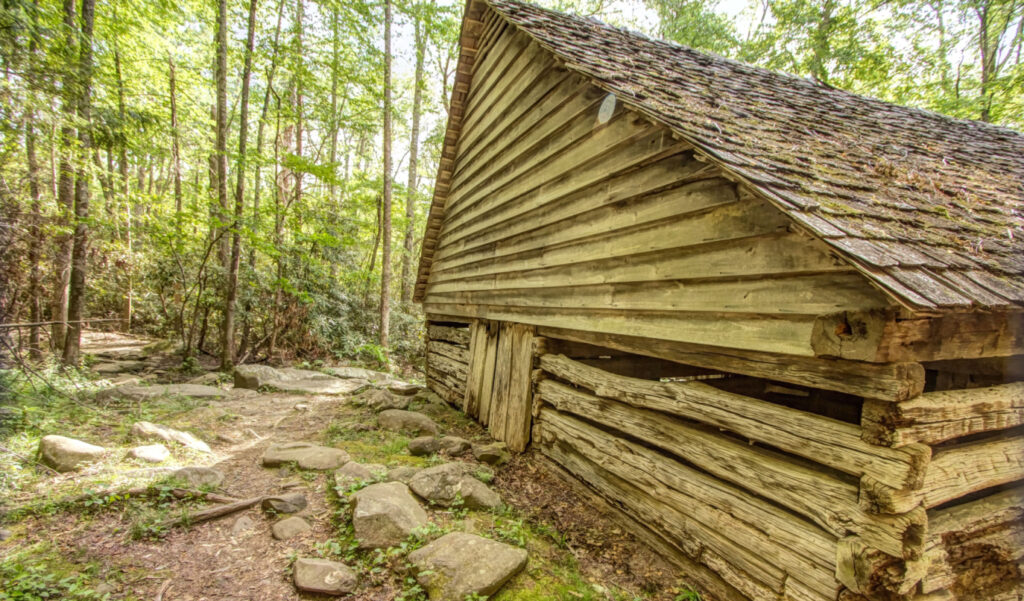
The Seven Years’ War and its aftermath revealed to a generation the promise of the West. In the years that followed, tens of thousands gambled their futures on it. In 1763, King George III’s Royal Proclamation attempted to halt colonial expansion beyond the Appalachian watershed, reserving the Ohio River Valley for Native nations in the hope of stabilizing relations. The order tied the hands of speculators, who suddenly found their paper claims in limbo, but it did little to stop squatters. Families did not wait for charters, titles, or surveyors. They pushed across the mountains, cleared forests, planted crops, and raised cabins wherever they could.
Here we leave the world of counties named for princes and governors, where men curried favor with patrons to secure tracts on paper, and step into something different: a frontier where paper titles were often contested, and where weak, overlapping jurisdictions left ordinary people to sort out land and power themselves. When most people picture the “Wild West,” they think of Dodge City or Tombstone in the 1870s. But the western frontier of the 1760s and 1770s was far more fragmented. Colonial authority stretched thin, courts competed or collapsed, and currency was scarce and unstable. Life on the edge of settlement operated less by statute than by custom, kinship, and force. It was a world where land went not to those with grants signed in Williamsburg or Philadelphia, but to those who could hold it long enough to matter.
For squatters, landholding was not about deeds or patents—it was about occupation and control. You reached the land, found no signs of another’s claim that couldn’t be ignored, and declared it your own. Clear a field, raise a cabin, plant corn, and your hold becomes stronger. It wasn’t ironclad, but it was visible, tangible proof that the land was “yours.” A crude log cabin and a patch of corn meant more than any parchment, which held little weight west of the Alleghenies. Tomahawk rights—blazing trees and marking corners—served as shorthand until occupation could be proved.
In the initial rush, land was cheap, shaped by the laws of supply and demand. Howard L. Leckey’s The Tenmile Country and Its Pioneer Families recounts how one squatter, Isaac Stewart, sold his tomahawk claim for a rifle, while a former Fort Pitt soldier traded his army jacket for a land claim.[7] Naturally, prices varied according to the seller’s hold. Power lay in holding on to land long enough to cut logs, raise a roof, or put corn in the ground, so that the claim was not just marked but lived.
The Anglo-European Logic of Landownership
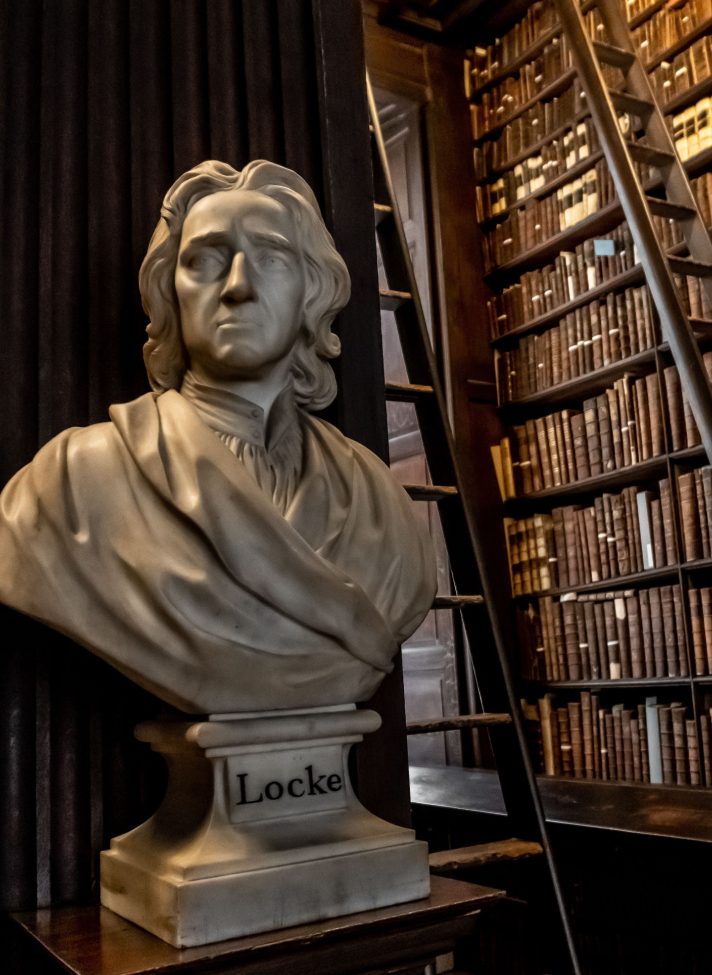
To understand why squatters believed they had a right to the land, we must return to the ideology settlers brought with them across the mountains. Colonial land law drew heavily on John Locke’s Second Treatise of Government (1689), which argued that uncultivated land had no value until labor transformed it.[8] Yet Locke was only formalizing a logic that the English had practiced in Ireland for over a century. During the Tudor and Stuart plantations in Munster and Ulster, officials declared Irish land “waste” because it was not enclosed or improved in the English sense, and therefore legally open to English settlement. This reasoning crossed the Atlantic intact. Under this logic, labor created ownership. It was an idea that made squatting feel justified, and it helped fuel the expropriation of Native land. For both speculators and squatters, cutting trees, planting corn, and raising cabins were not just acts of survival, but statements of ownership.
Accountability Gap
“On the 3rd of April, the land office was opened, and a great crowd attended. Numerous applications, or locations as they were called, were received for the same spots of land, from different persons, under various or familiar descriptions”[9] – 1969, Annals of Buffalo Valley
The documentary trail of frontier settlers often ends abruptly. In some cases, local records are blunt: “George Gabriel, no doubt, died that year, as his name disappears from their assessment list.”[10]. In others, later genealogical memorials resort to formulaic explanations: a man who at some point disappeared “is said to have moved to the frontier where he and his entire family were killed by Indians.”[11] Such phrases became stock devices, requiring no evidence, and were invoked whenever an individual or an entire family vanished from the record. Some vanishing from the rolls may reflect natural death, accident, or quiet relocation.
The records are understandably blank on what it truly took for squatters to hold their claims against rivals in the early days of the land rush. One only has to imagine the possibilities: a claimant might succumb to disease, freeze to death during the winter, drown in the river, drink himself to death, be killed by wildlife, fall victim to Native attack, or simply vanish without a trace. With no one around to witness or even to notice, the need for a convincing story disappeared. Any sudden death or mysterious absence instantly opened a cleared patch or half-built cabin to the next man willing to claim it.
This lack of accountability extended beyond settler rivalries into relations with Native peoples. Violence could be casual and opportunistic, and often went unpunished. One instance account survives precisely because the victims were Native, not fellow squatters. The Annals of Buffalo Valley records how a settler named Frederick Stump killed White Mingo and five other Lenape who had “got too drunk” while visiting his cabin. He disposed of their bodies through a hole in the ice, then destroyed two nearby cabins, killing the women and children within, to silence anyone who might raise an alarm.[12] Stump’s murders were remembered only because his victims were Native. For that very reason, he chose to reveal the murders to his fellow Anglo-European squatters, and though arrested, he was—as he predicted—promptly released.
White Mingo moved in the same multi-cultural trading world as Captain Bull, his name preserved in the same Baynton, Wharton & Morgan ledgers. Yet the senseless murder of White Mingo and his family drew no lasting notice. It did not offer the kind of tidy frontier drama that “avenging the Stroud family” did in the Bulltown story. Their killer not only went unpunished, but also almost certainly profited from having fewer Native neighbors competing for land and local resources. This should be recognized as another senseless killing in the long record of Native lives taken by settlers who chose murder over coexistence. Yet it also reveals something more universal about the frontier: how distance, the absence of authority, and isolation can strip away the most basic safeguards of human life. We know of what happened to White Mingo and those close to him, because their murderer did not need to fear the consequences, the same could not be said for settlers and their families who disappeared under the ice similarly, they were just chalked up to more Native victims.

What is striking about the frontier is not simply its violence but its invisibility. Modern readers can easily imagine the colonial backcountry as a rustic paradise—open land, fresh starts, and endless opportunity. But the historical record of the period thins almost immediately beyond the towns and courts of the seaboard, leaving historians with fragments that suggest more than they confirm. A man’s disappearance might be blamed on a Native attack, a winter river, a hungry pack of wolves, or never explained at all. The critical truth is that those who stepped beyond the orbit of chartered towns, county courts, and subsidized lending entered a vacuum. Some reappear years later in North Carolina, Kentucky, or farther west; others vanish entirely, absorbed by the anonymity of a world with no witnesses.
Conclusion:
Those who left the orbit of class filtering, building codes, improvement deadlines, and patronage requirements stepped into a vacuum. East of the Blue Ridge, land passed through governors, patrons, charters, surveys, and wills—imperfect, often corrupt, but still tethered to law. Property there followed an Anglicized logic: Locke’s formula of “improvement” as legitimacy; belonging earned through labor; order enforced through paperwork and patronage. Beyond the mountains, none of that scaffolding held. The farther one moved from the tidewater, the less the tenets of Anglo-European order applied.
Across the Alleghenies, a claim endured only as long as a family could defend it. Cabins were traded for coats, tomahawk rights contested, and names disappeared from assessment rolls without explanation. The systems that had structured society in the East—legal title, county courts, and survey lines dissolved on the frontier. In their place stood only survival, kinship, and opportunism. Those who thrived in that vacuum embraced their independence, and from the beginning they resisted every attempt to impose order from beyond the ridge. While speculators lobbied land offices for parchment, squatters were already living off the land, testing what freedom meant when no law stood behind it.
Frontier survival demanded more than violence or opportunism. Most squatters were not murderers, they were families seeking footholds. In the ungoverned spaces beyond the Blue Ridge, endurance depended on networks of kin and neighbors. Clearing land, raising cabins, planting corn, and defending claims required labor no single household could manage alone. These improvised alliances—built out of kinship, proximity, and necessity—formed the only real structure the frontier had. In a landscape where titles were uncertain and boundaries blurred, collaboration could matter as much as a rifle, sometimes more. Community was not guaranteed; it was constructed, one borrowed tool or shared harvest at a time.
Yet every community created in the woods created its shadows as well. The same kin networks that held people together also taught them who was not part of “us,” just as brick requirements in the east had once sorted out who was deemed “fit” to belong. On a frontier without courts, sheriffs, or fixed boundaries, fear filled the space where institutions were missing. Outsiders became easier to imagine than to understand, and in that imagining they were often transformed into threats. That instinct—born of isolation and uncertainty—outlived the frontier itself, surviving in the stories later generations told about who belonged, who didn’t, and who was to blame when something bad happened.
The mythology we inherit about that world is no more accurate than the Hollywood West that eventually followed it. The stories we tell about the frontier have always mattered as much as the frontier itself. Since the beginning of film, racial identity mattered far less to Hollywood than the visual story it wanted to project. Casting directors repeatedly chose non-Native actors for Native roles so long as they matched the aesthetic western cinema invented for “Indians.” Even today, the actress who plays Monica Dutton in Yellowstone is not of Native descent. The effect is unchanged: Native people on screen are creations of storytelling, not reflections of community, culture, or lineage.
The same dynamic shaped the eighteenth-century frontier. Settlers did not step into a landscape of narrative clarity but into a tenuous, volatile borderland where alliances shifted, land claims contradicted one another, and every family who moved west gambled everything on uncertain ground. And when settlers vanished—whether due to Native retaliation, fellow squatters, criminal bands, or simply the hazards of wilderness life—the story that traveled back east was nearly always the same: “the Indians did it.” Myth supplied order where law could not.
The frontier was less a place than a story—one constantly rewritten to explain who belonged, who didn’t, and who paid the cost of making an Anglo-American world out of someone else’s homeland. The narratives that justified settlement in the 1760s and 1770s were the ancestors of the stories Hollywood told two centuries later. Both crafted a West that never truly existed, and both overshadowed the lived reality: that the line between order and chaos, belonging and dispossession, was as thin as a surveyor’s chain and as fragile as the people who staked everything on it.

Notes & Citations
[1] “An Act: Continuing the Act Directing the Building the Capitol and the City of Williamsburg; With Additions, 1699,” Encyclopedia Virginia, accessed October 6, 2025, https://encyclopediavirginia.org/primary-documents/an-act-continuing-the-act-directing-the-building-the-capitol-and-the-city-of-williamsburg-with-additions-1699/.
[2] The Statutes at Large; Being a Collection of All the Laws of Virginia, Vol. 11 (Richmond: Printed by R. & W. Gray, 1825), 139 & 270, HathiTrust Digital Library, https://babel.hathitrust.org/cgi/pt?id=hvd.hxh5uc&seq=419.
[3] “M3301004 Manuscript,” Colonial Williamsburg Foundation, Rockefeller Library, Williamsburg, Virginia, accessed October 7, 2025, https://research.colonialwilliamsburg.org/DigitalLibrary/view/index.cfm?doc=Manuscripts/M3301004.xml&highlight=Brick
[4] Colonial Williamsburg Foundation. “Governor’s Palace.” Colonial Williamsburg Digital Library. Accessed October 7, 2025. https://research.colonialwilliamsburg.org/foundation/edu/govpalace.cfm
[5] “George Washington to William Bartlett, lease of 125 acres in the Barrens of Bullskin, March 18, 1774, Berkeley County, Virginia, annual rent £6, condition to plant 100 peach and 100 winter apple trees,” Berkeley County Over 250 Years of History, accessed October 7, 2025, https://www.berkeleywv.org/574/Over-250-Years-of-History
[6] “Warner Washington to George Washington, 7 March 1786.” Founders Online, National Archives. https://founders.archives.gov/documents/Washington/04-03-02-0507.
Original source: The Papers of George Washington, Confederation Series, vol. 3, 19 May 1785–31 March 1786, ed. W. W. Abbot (Charlottesville: University Press of Virginia, 1994), 588.
[7] Howard L. Leckey, The Tenmile Country and Its Pioneer Families (Waynesburg, PA: Greene County Historical Society, 1950). 12.
[8] Locke, John. Second Treatise of Government. Edited by C.B. McPherson. Indianapolis & Cambridge: Hackett Publishing Company, Chapter V Section 42.
[9] John Blair Linn, Annals of Buffalo Valley: Embracing a Concise Account of the Early Settlement of the Valley, and of Its Subsequent Progress (Fort Johnson, Pa.: Johnson Print, 1877), 32, https://archive.org/details/annalsofbuffalov00linn/page/24/mode/2up.
[10] John Blair Linn, Annals of Buffalo Valley: Embracing a Concise Account of the Early Settlement of the Valley, and of Its Subsequent Progress, 37.
[11] Henkel Memorial Association, The Henkel Memorial: Historical, Genealogical, and Biographical, (York, PA: publisher: A. Stapleton, 1910), [192].
[12] John Blair Linn, Annals of Buffalo Valley: Embracing a Concise Account of the Early Settlement of the Valley, and of Its Subsequent Progress, 24.
For readers who wish to follow ongoing research, subscription is available in the footer.