By the spring of 1774, the Ohio frontier no longer operated on restraint or negotiation. Part III traced the point at which fear stopped functioning as a warning and began operating as a guide. Rumors were no longer assessed or delayed; they were acted upon. Violence did not erupt spontaneously—it was rehearsed in advance of any confirmed threat.
Inheritance Without Restraint
The Ohio frontier did not produce monsters; it produced men shaped by inheritance. Michael Cresap belonged to a second generation of frontiersmen raised to keep moving, taught that opportunity lay beyond the next ridge. The son of Thomas Cresap inherited not only his father’s grudges and ambitions but a worldview that treated forward movement as entitlement.
This inheritance was not unique to Cresap. The Tomlinsons, the Greathouses, and their kin were products of the same frontier lineage, families shaped by mobility and informal authority. These families did not arrive on the frontier seeking war; they came seeking advantage. Their succeeding generations would be amongst the landed class, those who achieved permanence, a status that has never ceased to matter in American life.
They inherited neither titles nor commissions, but expectations: that land would eventually yield to pressure, that violence could be justified before it was provoked. Yet the habits they carried—kin-based loyalty, suspicion of outsiders, and faith in preemptive force—made violence not an aberration, but an available tool. By 1774, inheritance no longer meant land alone; it meant an education in how to act when fear presented itself as an opportunity.
Cresap’s hesitation at Wheeling mattered—but it was no longer sufficient. By 1774, belief itself could not restrain men who had learned to treat fear as instruction. Once that shift occurred, leadership no longer depended on legitimacy; it depended only on proximity and confidence.
Violence as Organization
Part III demonstrated that frontier violence required coordination. Taverns became organizing spaces not because they were lawless, but because they were a place of union for those of Anglo-American civilization; places for settlers alone on large tracts of land to converge.
Authority flowed through kinship and familiarity, not commissions. Men followed figures like Daniel Greathouse because the frontier rewarded decisiveness over restraint. The murders at Yellow Creek were not defensive reactions. They were premeditated acts that cleared contested ground. Violence functioned as a method of claim-making; removing people first, sorting justification later.
Where Explanation Ends
Part III closed at the point where the explanation itself fails. What broke in 1774 was not simply peace, but the assumption that peace could be restored through negotiation. The Ohio Country did not fall into war so much as see past the illusion that restraint still governed it.
For Logan, the massacre marked the collapse of the world his father, Shikellamy, had tried to preserve, a world where diplomacy and cross-cultural ties still mattered. What had once been mediation became vengeance. What had once been rumor became certainty.

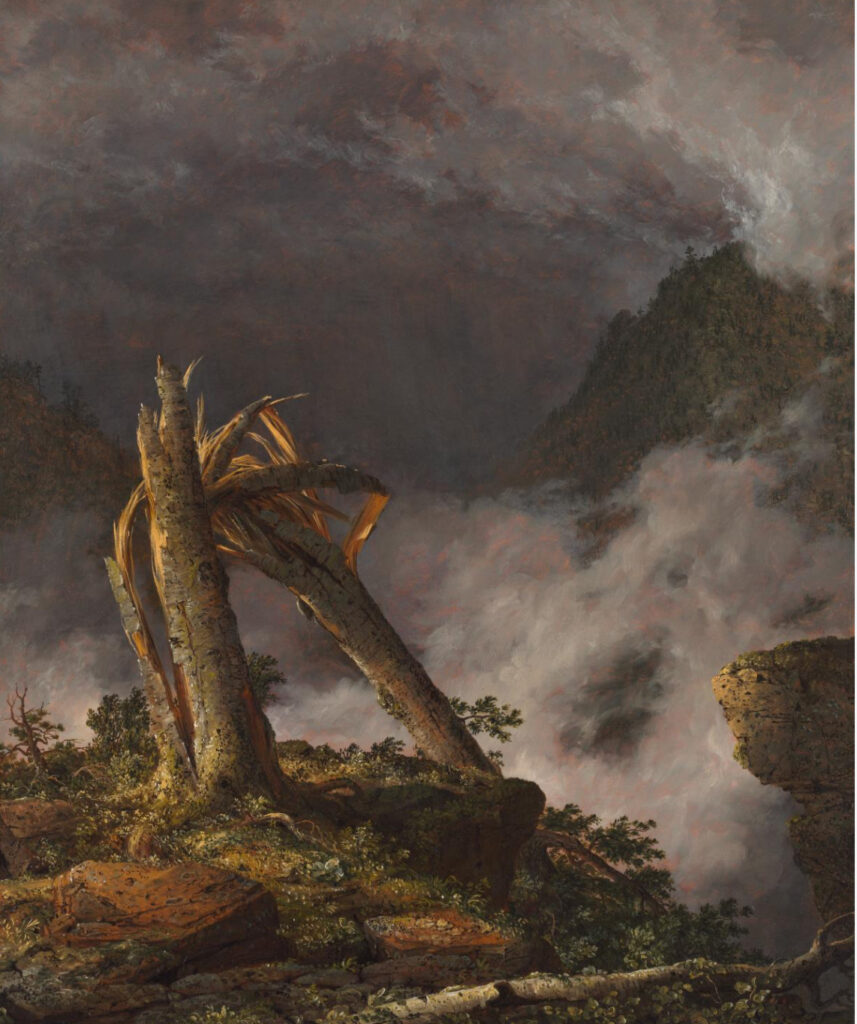
[1] Frederic Edwin Church, Storm in the Mountains, 1847, Cleveland Museum of Art, accessed November 9, 2025, https://www.clevelandart.org/art/1969.52.
For readers who wish to follow ongoing research, subscription is available in the footer.