From the end of the Seven Years’ War until the Treaty of Fort Stanwix in 1768, violence on the frontier persisted but remained sporadic, a background hazard of frontier life rather than a force that governed daily decision-making. It followed recognizable patterns: clashes tied to military movements, retaliation after specific disputes, or attacks clustered around forts. People understood where danger lay and adjusted accordingly, but they continued on—traveling, trading, and settling despite the risk. Violence, however brutal, could still be explained within an existing moral and political framework.
That framework collapsed in the fall of 1773. A small party traveling west, among them the teenage sons of Daniel Boone and William Russell, was set upon and murdered without warning. No treaty had been violated, no battle preceded it, and no immediate provocation could be identified. The killing appeared senseless, and it was precisely that seeming randomness that unsettled the frontier. An aura of horror ignoti, fear of the unknown, settled over the frontier like a cold breath. That chill spread quickly because the story did not remain local. In the aftermath, violence ceased to be interpreted as a failure of order and instead became a form of foresight. If murder could strike without cause, then restraint itself appeared dangerous. Fear no longer followed violence; it anticipated it.
By 1773, nearly fifty printing presses were operating across the colonies, enough to ensure that frontier violence was rapidly transmitted, reprinted, and absorbed into a shared colonial consciousness. The colonies stood on the edge of a print explosion, and the Russell Massacre entered a media environment primed to carry fear far beyond the frontier. What had once been distant bloodshed now felt immediate, patternless, and personal.
In March or early April of 1774, Isaac Crabtree, one of the few survivors of the Russell Massacre, shot and killed a Cherokee man while attending a spring festival in Jonesborough, North Carolina (present-day Tennessee). The frontier waited for retaliation that seemed inevitable. This was a fear it understood.
But the reprisal did not come immediately.
It is tempting to read this shift through the lens of earlier frontier violence, particularly the Paxton massacres of 1763–1764. But Paxton, for all its brutality, did not fundamentally alter how violence was interpreted on the frontier. It was understood as vengeance grounded in war, however morally indefensible its targets may be. By contrast, the killings that followed the Russell Massacre emerged amid the absence of formal conflict and without clear causation. In that ambiguity, violence ceased to operate as a response and instead became a prediction. Where Paxton revealed the limits of law, the Ohio Valley revealed the danger of waiting.
In the silence that followed, something subtle and dangerous took shape. Violence no longer needed to answer violence; it only needed to be anticipated. Men learned to act not in response to war, but in expectation of it, striking first to avoid being struck later. At that moment, the frontier crossed from reaction to preemption.
Foreshadowing the Yellow Creek Massacre
Meanwhile, as word from the south of the escalating fear of reprisal reached Fort Pitt, Dr. John Connolly faced his own warning sign of frontier unrest. In a journal entry dated April 20, 1774, he recorded that Chief White Eyes, Koquethagechton, a Lenape leader known for his diplomacy and consistent advocacy of peace, complained: a group of settlers at Yellow Creek “insulted and abused” him [1].
White Eyes was no ordinary chief. Founder of White Eyes Town and an ally of Moravian missionary David Zeisberger, he was respected by both Native communities and colonial authorities. When a figure of such stature raised a grievance, it demanded an immediate and severe response. His complaint was not isolated; other Native messengers up and down the Ohio reported settlers threatening to kill them outright.
Connolly reacted by issuing public circulars from Fort Pitt, ordering them to be posted in frontier settlements. The notice reminded inhabitants that friendly Natives who appeared peaceable were to be “treated with friendly terms.” Despite his effort to maintain order, it is difficult to ignore the proximity between White Eyes’s humiliation at Yellow Creek and the massacre that would soon occur there. It is a fair inference that some of the same men later implicated in the killings, the Greathouse and Tomlinson brothers or their associates, were involved in this earlier incident as well.
A Frontier on Edge
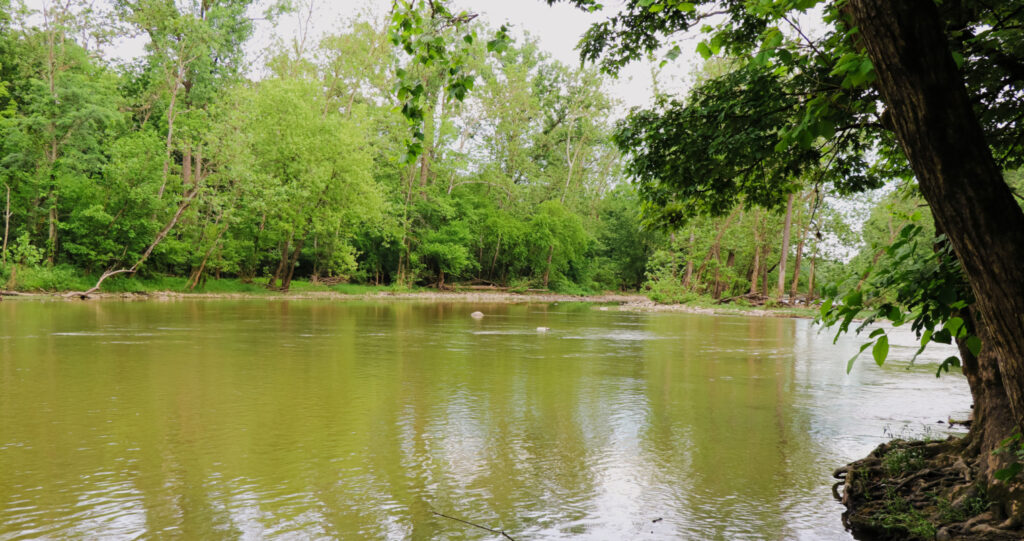
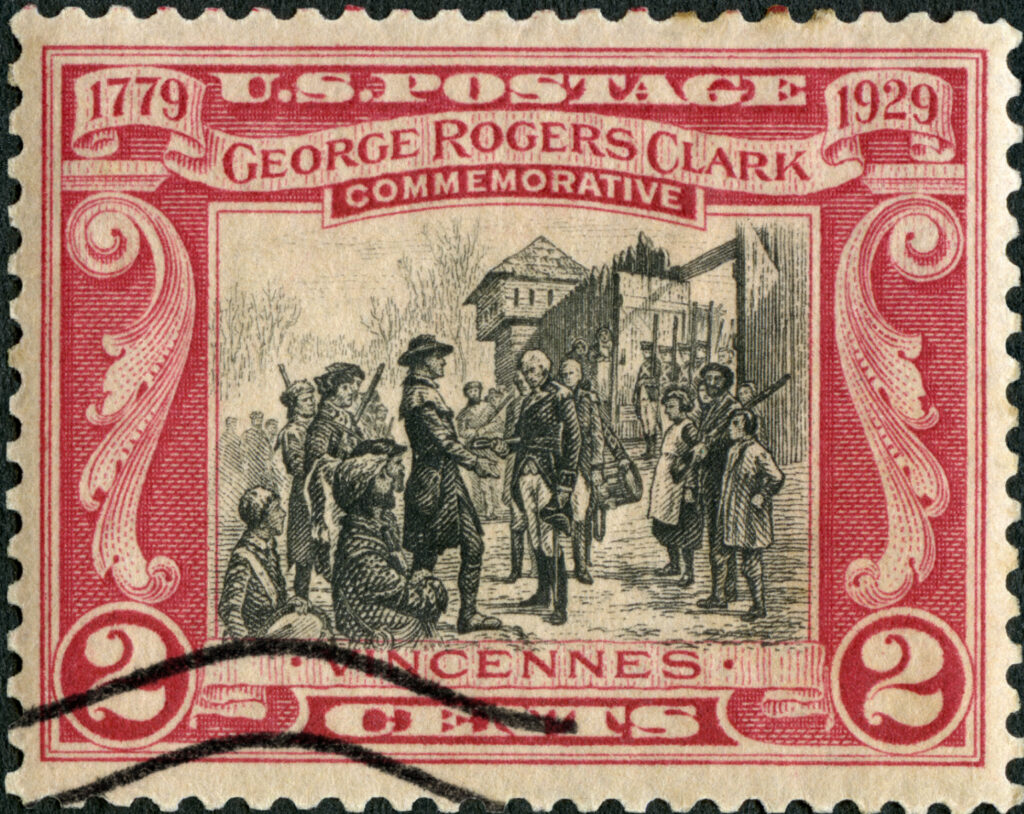
On the same day, 20 April 1774, George Rogers Clark the man who would one day be known as the “Hannibal of the West” was a twenty-two-year-old newly appointed militia Captain, and a party of settlers reported hearing rumors of nearby hunters taking fire. Their large party was more force than a contingent. Together they were gathering at the mouth of the Little Kanawha, from whence they intended to use as a jumping off point to journey west to Kentucky lands.
Clark and his fellow frontiersmen were by then hardly the first wave of Kentucky-bound opportunists. Dr. John Connolly had already secured a personal claim to the Falls of the Ohio, reinforced by Lord Dunmore through special dispensation, well before he marched into Pittsburgh to claim it for Virginia. The Falls symbolized the next frontier, the gateway to a fertile and (to colonial eyes) “empty” west. Nearly every man of ambition along the Ohio, Cresap, Sappington, even George Washington, harbored some plan for Kentucky.
These frontiersmen had reason to be wary, though not always for the reasons later claimed. When Connolly wrote to George Washington on May 28, he portrayed the Ohio as already seething with Shawnee “murders and robberies.” But that letter came after settlers had drawn first blood. It captured not the quieter uncertainty of early April but the panic that followed, when rumor and retaliation became indistinguishable.
However, it is safe to assume that if the Shawnee, or any Native nation along the Ohio, were angry, they had ample reason. Clark and the other Kentucky-bound pioneers were trespassing on lands that Native leaders had repeatedly insisted were off-limits. Even the 1768 Fort Stanwix line, which the British and the Six Nations claimed as the legal boundary, was viewed by the Shawnee, Lenape, and Ohio Haudenosaunee (Mingo) as an imposed theft that pushed far too deep into their homelands. Now, even that contested boundary was being ignored; what the settlers framed as exploration was, in practice, a steady penetration into Native territory.
As Clark waited on the Little Kanawha, word reached him that an advance party had encountered resistance from Shawnee at the mouth of the Scioto River and that several Native people had been killed in the exchange.[3] So when a new rumor spread that nearby hunters had been fired upon, panic set in among the Kentucky-bound settlers. They knew Shawnee mourning rituals demanded retaliation; any travelers on the Ohio might become the target.
The scores of would-be settlers gathered at the mouth of the Little Kanawha concluded that an attack was imminent. Their own advance party had already shed blood, and they feared a wave of vengeance was close behind. Rather than wait to be struck, they resolved to carry the fight into Shawnee country in a preemptive strike. Their plan was an assault on a place they called Horsehead Bottom, supposedly located somewhere on the Scioto River.
It remains unclear which settlement Clark referred to as Horsehead Bottom; the only documented Native town by that name lies far to the south in Virginia. The known site, called Horsehead Bottom, was nowhere near the Scioto River. Topographical descriptors, such as Bottom, Lick, Run, Fork, or Horsehead, were English naming conventions, not Native onres. Perhaps Horsehead Bottom was coined by surveyors or frontier settlers who were already eyeing the land for future claims.
The Scioto is a watercourse that once snaked over 200 miles through Shawnee territory, connecting numerous Indigenous settlements that would have forcefully resisted, if not entirely obliterated, settler encroachment. The prominent towns of Chillicothe, home to Chief Cornstalk, and Kispoko Town were both located on the Scioto during this period.
A settlement known to traders as Lower Shawneetown had once stood at the mouth of the Scioto, the very area where the advance party claimed to have met resistance. Though abandoned during the Seven Years’ War, its memory lingered. For the settlers massed at the Little Kanawha, a Shawnee town on the Ohio was not a historical fact but a living threat; whether or not it still existed mattered less than the fear that it might.
Attack on the Scioto
Clark and the settlers talked about striking the Scioto; they were not talking about a raid. They were talking about entering the Shawnee homeland against established towns, instead of the hunting encampments they were used to seeing.
At this moment, the Shawnee were not preparing for war as a nation. Following his meeting with Chief Cornstalk, Captain John Pike would later report that Shawnee leaders wished to continue living peacefully and had instructed their “young people to remain quiet.” [5]
The Shawnee were deeply angered by settler incursions west of the Ohio and by what they perceived as duplicity from colonial intermediaries such as George Croghan and Alexander McKee. [6] Yet the war that followed was not of their choosing. It emerged not from Shawnee design, but from a frontier environment that rewarded preemptive violence and punished restraint.
Moravian missionary David Zeisberger observed that the Shawnee as a nation were neither committed to peace nor eager for war. Rather, they remained deliberately restrained, capable of being influenced toward peace through their Lenape partners, but equally prepared to respond if provoked. Zeisberger warned that a direct white attack on a Lenape community would almost certainly trigger a general war. An attack on a single Native community threatened to collapse the fragile system of intertribal diplomacy that had thus far held the peace.
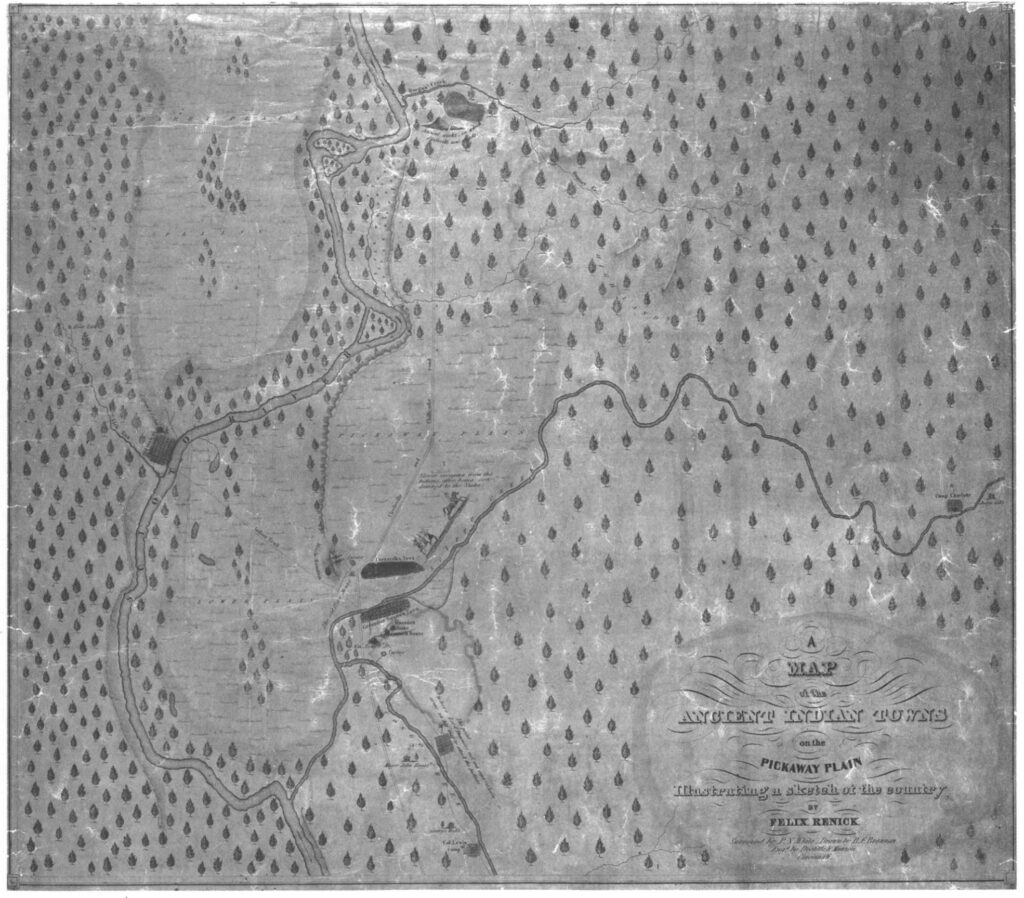
An attack on a Scioto Native community by Clark and his party would have been catastrophic, not because its outcome was uncertain, but because its meaning was unmistakable: war. It would have stripped Shawnee leaders like Cornstalk and their Lenape allies of the ability needed to restrain younger warriors, whose patience had already been strained by repeated incursions and broken promises.
And the Shawnee were not alone in urging restraint; among the Ohio Haudenosaunee, another voice emerged. Nineteenth-century chroniclers such as Alexander Scott Withers and Boyd Crumrine preserved a story first attributed to a man known as Judge Jolley.
“The Indians had for some time before those events thought themselves intruded upon by the ‘Long Knives’ (as they at that time called the Virginians), and many of them were for war. However, they called a council, in which the chief Logan acted a conspicuous part. He admitted their grounds of complaint, but at the same time reminded them of some aggressions on the part of the Indians, and that by a war they would but harass and distress the frontier settlements for a short time; that the ‘Long Knives’ would come like the trees in the woods, and that ultimately they should be driven from the good lands which they now possessed. He therefore strongly recommended peace. To him they all agreed, grounded the hatchet, and everything wore a tranquil appearance—when, behold!” [7]
Sometimes I can’t help but feel this account was crafted after the fact, that Logan, of all people, the same man who would soon wage his own war of retribution, was here cast as the voice of peace. There was no way Judge Jolley could have been present at the council itself; whatever he knew, he must have heard secondhand. And yet, when I remember that Logan was the son of Shikellamy, a diplomat who spent years mediating between Native nations and colonial authorities, I find the story harder to dismiss outright. It is entirely believable that Logan, shaped by his father’s example and keenly aware of the costs of war, would have urged restraint if only to spare his people from the ruin he knew would follow.
This Logan, the man who urged peace, would soon die on the Ohio River across from the mouth of Yellow Creek, not in body but in spirit, undone by the violence forever tied to his name.
Conclusion
By April 1774, the Ohio Valley had become a landscape of crossed wires and incompatible expectations. Settlers interpreted every silence as a warning; Native leaders treated every rumor as a potential spark; colonial agents fed the flames through ambition and mismanagement. The world that had barely held together through uneasy compromise was now thinning to the point of rupture.
If the Russell Massacre of 1773 was the spark, then the frontier spent the next six months piling up dry tinder. Every rumor, insult, and skirmish fanned the sense that another war was coming. By the spring of 1774, fear had hardened into conviction: if violence was inevitable, better to strike first. Along the Ohio, Native and settler alike watched the river darken with suspicion. Both sides blamed the other for every traveler who disappeared into the forest and never came home.
In such a world, murder could masquerade as necessity. The killings across the Ohio from Yellow Creek were not spontaneous, they were the expression of a belief that safety could only be bought with blood. For the Native nations of the Ohio Valley, the massacre was not a random outrage but a breaking point, proof that talk of peace had been a lie.
After months of fear of an upcoming frontier war between settlers and the Native peoples, a war seemed imminent to many. The settlers poised at the mouth of the Little Kanawha had their hearts set on western lands and were willing to carry the fight to the Shawnee if that’s what it took to secure those lands. One problem was that no one quite knew how to start a war. They needed someone with experience who could organize and lead such an undertaking. At this point, someone brought up that Michael Cresap was in the area.

Notes & Citations
[1] Connolly, John. “Journal of Captain John Connolly.” NYPL Digital Collections, April-May 1774” https://digitalcollections.nypl.org/items/045855b0-3ca5-0134-558b-00505686a51c
[2] John Connolly. “Founders Online: To George Washington from John Connolly, 28 May 1774.” National Archives and Records Administration. https://founders.archives.gov/documents/Washington/02-10-02-0055.
[3] Butterfield, Washington-Crawford Letters, being the Correspondence between George Washington and William Crawford, from 1767 to 1781, Concerning Western Lands. 47-48.
[4] Flickr User (Ohio Historical Society). “A Map of the Ancient Indian Towns on the Pickaway Plain.” 1844. Hand-colored print by Felix Renick; surveyed by P. N. White, drawn by B. F. Brannan, engraved by Doolittle & Munson. Courtesy of the Ohio Historical Society via Flickr Commons. https://www.flickr.com/photos/cbustapeck/7508971978
[5] Peter Force, ed., American Archives: Fourth Series, Volume 1 (Washington, D.C.: M. St. Clair Clarke and Peter Force, 1837), [284], Internet Archive, https://archive.org/details/americanarchives41forc.
[6] Force, American Archives, [284–285]
[7] Crumrine, Boyd. History of Washington County, Pennsylvania: With Biographical Sketches of Many of Its Pioneers and Prominent Men. Philadelphia: H.L. Everts & Co., 1882. https://archive.org/details/historyofwashing00crum/page/68/mode/2up. 69.
For readers who wish to follow ongoing research, subscription is available in the footer.