In the wake of the massacre at Yellow Creek, the Ohio Valley descended into chaos, but before following Logan’s path of retaliation, we must pause. The violence that followed Yellow Creek did not emerge from a vacuum. It grew from a landscape already heavy with memory, fear, and erasure — a world settlers did not understand but could not ignore.
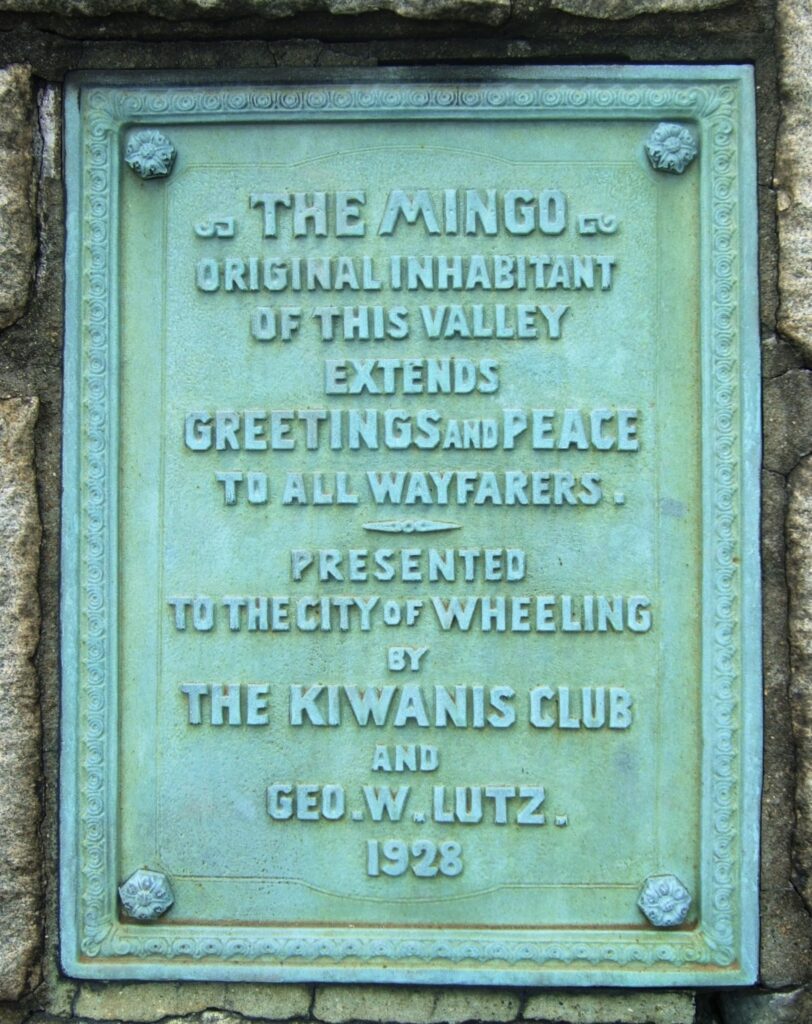
“Our World”
Have you ever stared into the forest and felt, deep down, that the land you call ‘yours’ will never really be yours at all? You have only staked a claim for now. This place you call your own has a past, memories rooted deep down in the soil, memories it will never share. Others have walked here before, lived, loved, and died… and now they are forgotten.
The land remembers their laugh, their first cry, the steady rhythm of their breath as they lined up their shot, the songs they sang, and their last breath. Yet we act like the world is our own and the dominant Anglo-European history is all that there is to know. Perhaps that’s why in Appalachia they say: don’t stare too long into the trees after dark. The forest remembers what we have chosen to forget.
The Problem of Perspective
But to understand Logan’s world is to admit how little of it survives. The massacre at Yellow Creek left scars on both sides of the Ohio, yet only one side’s voice remains in the archives. Historians should strive to consider both sides equally. Otherwise, we risk selecting evidence to fit a preconceived notion—and at that point, we are no longer historians but pundits. However, the problem isn’t that historians don’t want balance. It’s that the archive itself is imbalanced by design.
What Do the Sources Say?
The Mingo, like most Native groups in the Ohio Valley, preserved their history through oral traditions—stories, speeches, kinship ; memoryforms of record that colonial archives were not built to preserve. For many cultures, history was not something to be abstracted and archived; it was woven into spirituality, ceremony, and the sacred. Knowledge was passed within families and clans, not for outsiders or posterity.
What survives, then, comes almost entirely through colonial filters. Missionaries, traders, and soldiers recorded what they heard, or thought they heard, shaping the narratives that would pass into settler histories. Every account carries with it the biases, misunderstandings, and agendas of its recorder.
The Limits of Anthropology
Could I turn to Lewis Henry Morgan’s 1851 League of the Ho-dé-no-sau-nee for insight? The short answer is no.
Morgan’s 1851 book was groundbreaking for its time but reflects 19th-century assumptions about Native peoples. In his later Ancient Society (1877), he even categorized Native cultures as “savage” or “barbarian.” Yet unlike many of his contemporaries, Morgan admired Haudenosaunee political sophistication. That said, understanding that the Cayuga were matrilineal from Morgan’s work, tells us little about Logan’s household or the Mingo community he lived in.
Modern anthropologists reject the essentialism of Morgan’s era. Cultures are dynamic. It’s a mistake to assume the Mingo of the Ohio Valley were identical to their eastern Haudenosaunee relatives—or even to their non-Haudenosaunee neighbors. As a multiethnic, frontier people, they occupied a unique cultural space we cannot simply collapse into the traditions of their kin.
Franz Boas and his students deepened this critique in the early 20th century: you can’t know a tribe’s customs just because you know one member’s customs. Imagine someone trying to infer yourtraditions from your next door neighbor.
History as Sacred Space
“We already know our history. It may not be written down, but we already know our history.”
—Armand Minthorn, Umatilla tribal spokesman [1]
We must also acknowledge that even modern members of the Seneca-Cayuga Tribe of Oklahoma aren’t necessarily experts on 18th-century Mingo culture, unless they’ve chosen to study it. Cultural memory is selective. Centuries of displacement have further complicated that inheritance.
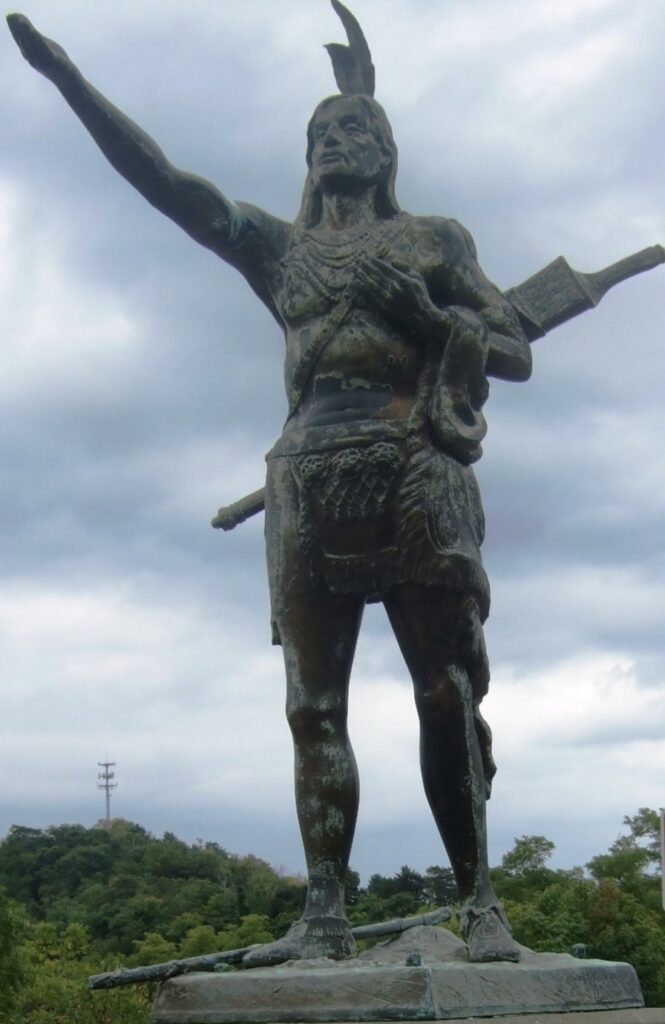
Those familiar with tribal histories, know some knowledge from the past cannot be shared with outsiders. In some Native cultures, the idea of history as something to be cataloged and preserved for the world’s consumption is itself foreign. History is relational, sacred, and deeply embedded in context; what is told and what is withheld depends on who is asking—and why.
Even now, Native communities are often asked to disclose the exact location of their sacred spaces before they can be considered to be recognized as protected spaces, while the government decides which of its own secrets to release.
Western societies often dismiss practices as “backward” when they don’t align with European influenced norms. Yet judged by the same standard, Western traditions, where sacred stories and memories are reduced to archives and footnotes, might have seemed equally backward to Native peoples.
Who was Logan
If Logan’s voice survives at all, it is because it broke through the records of those who tried to silence him. For generations, his words were copied into schoolbooks, recited by children who never knew the man or the world he came from. His name lingers across the map—in Chief Logan State Park, Logan County, Logantown, Pennsylvania, Logan, Ohio, and Logansport, Indiana.
Yet even here, his memory is distorted. Countless sources call him “Chief Logan,” though there is no evidence he ever held such a title. To the settlers, every prominent Native man was a “chief.” To his own people, Logan was a Cayuga, a diplomat, a brother, an uncle—and then, in 1774, a grieving warrior with little left to lose.
We will never know Logan as we know Washington—whose face stares out from currency—or John Jay, still the subject of dissertations and expert lectures. Most readers who arrive here have never even heard of Dunmore or Cresap. But Logan? They’ve heard his name, even if only as a place they pass on a map. His life was never written down for posterity. What remains are scraps—his grief, his fury, his words—echoing from a world already coming apart.
• • •
While Logan hunted far from the Ohio, messengers carried grim news: settlers had struck at Yellow Creek. His kin were among the dead.
Notes & Citations
[1] Harding, Sarah. “Bonnichsen v. United States: Time, Place, and the Search for Identity.” International Journal of Cultural Property 12, no. 2 (2005). https://doi.org/10.1017/S0940739105050149.
[2] Brad Mandel. “WheelingNationalRdMingoStatue2.jpg.” Wikimedia Commons. Accessed December 14, 2025. https://commons.wikimedia.org/wiki/File:WheelingNationalRdMingoStatue2.jpg.
[3] Brad Mandel. “WheelingNationalRdMingoStatue1.jpg.” Wikimedia Commons. Accessed December 14, 2025, https://commons.wikimedia.org/wiki/File:WheelingNationalRdMingoStatue1.jpg.
For readers who wish to follow ongoing research, subscription is available in the footer.