For decades, frontier settlers and Native communities inhabited culturally distinct yet overlapping diplomatic worlds. Anglo-American settlement would ultimately displace Native populations across the Ohio Valley. Yet, the core arc of this series has not been inevitability but escalation—cycles of fear, reprisal, and survival that hardened the borderlands long before formal war was declared. Long before Logan’s name became synonymous with vengeance, the frontier had already adopted patterns that would shape the western edges of the early United States for generations.
The violence that culminated at Point Pleasant did not begin in 1774. As the son of Shikellamy, Logan had borne witness to its evolution. He had sat in councils, mourned shattered communities, and watched year by year as events unraveled around him. Another family, the Ingles, bore witness, in their own way, to that same hardening. Their story reaches back nearly twenty years before Dunmore’s War, to a July morning in 1755 when Draper’s Meadows was destroyed.
Draper’s Meadows
In the early 1750s, as part of Virginia’s frontier diplomacy, Colonel James Patton, the recipient of a large 7,500-acre land grant from Virginia’s Governor Dinwiddie, had been deeply involved in escorting, managing, and relocating Native delegations and captives westward from Williamsburg. Patton later sold subdivided land tracts from his grant to purchasers, including John Draper and his brother-in-law, William Ingles.[1] However, land purchases aside, the cabins built on land claimed by John Draper and his sister Mary’s now deceased father, Draper’s Meadows, along Virginia’s New River frontier, continued to be the primary place of residence for many.
In 1754, Lieutenant Colonel George Washington, acting commander of a detachment of the Virginia Regiment, supported by Ohio Haudenosaunee allies led by Tanacharison, the “Half King,” skirmished with a French party commanded by Joseph Coulon de Villiers de Jumonville. Jumonville’s death in the encounter—remembered as the Jumonville Affair—helped precipitate the outbreak of hostilities in North America that would expand into the broader Seven Years’ War, known on the colonial frontier as the French and Indian War. Along the western frontier, the conflict quickly assumed a brutal character, marked by raids, reprisals, and the destruction of isolated settlements.
The following year, twenty-four-year-old Mary Draper Ingles and her sons, Thomas and George, were among those taken captive when a Shawnee-led raiding party destroyed Draper’s Meadows. Many of the men belonging to the extended family network were away assisting with the harvest when the attack began. William Ingles, preoccupied with the harvest but hearing a raised alarm, ran toward the cries to render aid, but was forced to flee two armed Shawnee pursuers. When he was able to return, his wife and children were amongst the taken, while his mother-in-law, infant niece, and Colonel James Patton were amongst the slain.
William Preston, nephew of Col. Patton, would have been present for the attack that day if not for the fact that he was nearby seeking assistance with the harvest at the home of the neighboring Lybrook family.
The captives were taken to a Shawnee village at the mouth of the Scioto on the Ohio River, possibly the same site later abandoned during the French and Indian War and encountered again by George Rogers Clark’s Kentucky-bound settlers in 1774, where a skirmish with Native people helped ignite the wider conflict that became known as Dunmore’s War. Within days of their arrival, Mary was separated from her sons when they were given to other families.
Mary eventually escaped and returned to Anglo-European society nearly five months after her abduction. Decades later, after Point Pleasant, William Ingles learned that the her captors had long believed she had been taken by an animal in the night, never imagining that she had walked home. Her journey from the vicinity of present-day Big Bone Lick in Boone County, Kentucky, to near modern Blacksburg, Virginia, likely covered between 500 and 700 miles across the Ohio Valley and the Appalachian frontier. Such a journey, undertaken largely on foot through a rugged landscape, has endured in American memory as a testament both to the extraordinary endurance required for survival and to the harsh realities faced by those living along the eighteenth-century frontier.
At the time of his wife’s return, William and his brother-in-law were away on the return leg of a visit to the Cherokee, apparently to find someone in that Nation who could negotiate with the Shawnee for their family members’ release.
Upon reuniting, the young couple sought refuge in the perceived safety of nearby Fort Vause. By late June 1756, however, the violence of the Seven Years’ War had again surged into the Upper Roanoke watershed. On June 25, a combined French and Native force overtook the fort, killing or capturing all within. William’s uncle, John Ingles, was among the dead; his aunt Mary, John’s wife, was taken captive.[3]
By the 1760s, the Ingles and Draper families had established Ingles Ferry along the New River, creating a vital crossing point in the expanding backcountry. The venture proved successful; by 1772, they had added a tavern that served travelers moving through the valley. The danger remained nonetheless. William’s son John, the youngest child born after his mother’s return from captivity, later recalled his father’s remark that “forting in”—securing families within blockhouses and stockaded forts—had become a seasonal ritual repeated year after year.[4] The family constructed their own fortified dwelling upon settling at the ferry site.
In settler memory, Mary Draper Ingles was remembered in her cabin, fashioning bullets, and as an enthusiastic horse rider who continued riding into her eighties.
A Wild “Indian”
After six years in captivity, Betty Draper, Mary’s sister-in-law, who had also been captured that day at Draper’s Meadows, was successfully restored to their family. It was then that the family likely learned that Mary and William’s son George, taken at age two, had died early on in his adopted captivity. The Ingles’ other son, Thomas, remained among the missing, his fate uncertain for years afterward.
Then in 1768, after thirteen years. Thomas Ingles, taken from his family at the age of four, returned without any knowledge of the English language or Anglo-European society. The effort to secure his return had begun a couple of years earlier. Around 1766, Thomas’s father came into contact with a former Shawnee captive named William Baker. Knowing of the boy’s survival, Baker agreed at William Ingles’s request to return west and negotiate his release. Baker and Thomas’s adopted Shawnee family eventually agreed upon a ransom. What followed, however, was less a simple recovery than a prolonged negotiation shaped by competing obligations of kinship and belonging.
John P. Hale, a later family descendant writing in the nineteenth century, recalled Thomas’s deep reluctance to leave the Native household in which he had been raised. During the first attempt at his recovery, he reportedly slipped away from Baker rather than abandon the family he had come to regard as his own. Nearly a year later, Baker and Thomas’s father traveled together to the Scioto to renew negotiations. Thomas was then away in Detroit with his adopted father, yet the residents of the Scioto village permitted the two men to remain among them while awaiting his return. When Thomas finally returned and encountered his birth father, he reacted warmly and this time willingly agreed to journey east. His adopted father acquiesced as well; after the ransom raised by half above the original sum was paid
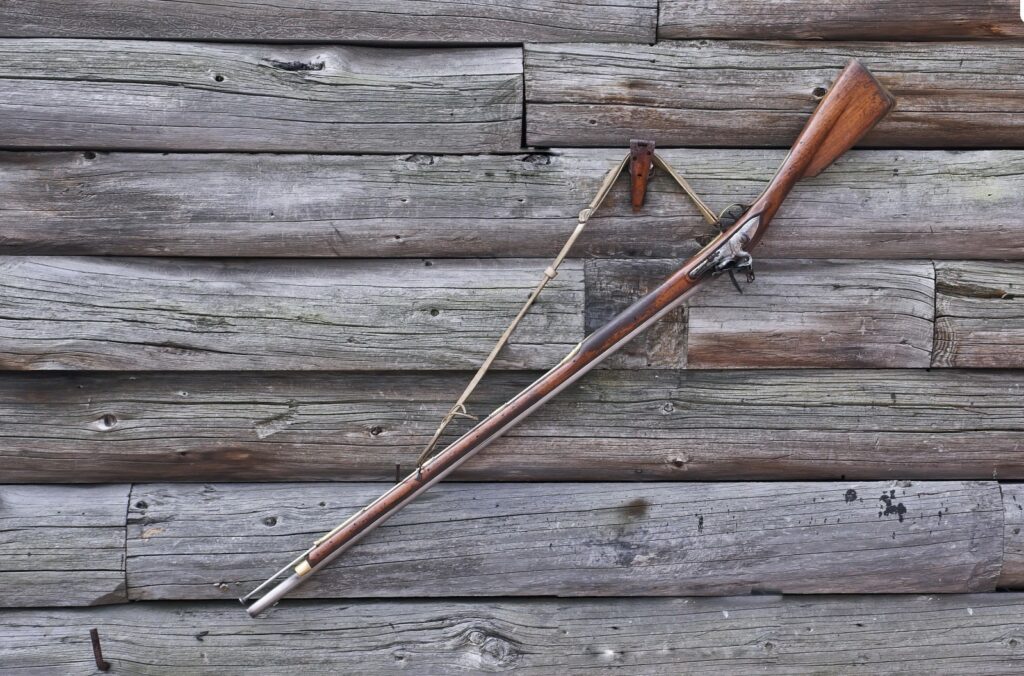
According to family tradition, Tomey Ingles, now seventeen, was “of a wild Indian in his habits and training.”[5] Though he gradually learned English and adopted colonial dress, he initially refused to part with his bow and arrows. Joy at his return was tempered by uncertainty about his future, and it was ultimately decided that he should be sent away to receive an Anglo-European education.
Castle Hill
Dr. Thomas Walker was a physician, surveyor, merchant, frontier explorer, and land speculator. In 1755, when Braddock’s forces marched west, supported by Virginia provincial troops, Thomas Walker served as a commissary responsible for provisioning the provincial forces. As commissary following Braddock’s defeat, Thomas Walker’s duties extended far beyond simple procurement. Acting as purchasing agent, transport coordinator, supervisor of livestock slaughter and preservation, paymaster, and keeper of accounts, he oversaw the acquisition, preservation, and distribution of provisions across a chain of vulnerable frontier forts.[6] In an environment where distance and winter posed dangers equal to enemy attack, the survival of Virginia’s frontier defenses depended upon such logistical labor.
After the death of Thomas Jefferson’s father when the future United States president was fourteen, Walker was appointed as one of his guardians. Walker remained an important early influence within Jefferson’s formative intellectual and social world. In 1748, Walker and Jefferson’s father had both been benefactors of a large 10,000-acre land grant in the New River Valley.[7] Having served as one of the surveyors contracted to lay out James Patton’s original land grants and as a recipient of substantial grants of his own, Walker maintained deep ties to southwestern Virginia and the frontier regions that would later become Tennessee and Kentucky. It was Walker who named the Cumberland Gap after King George III’s uncle, the Duke of Cumberland, remembered by critics of the brutal suppression of the Scottish Highlands following the defeat at Culloden as “Butcher Cumberland.”
When William Ingles needed someone to mentor and oversee his son’s education, he ultimately relied on his longtime associate, Thomas Walker.
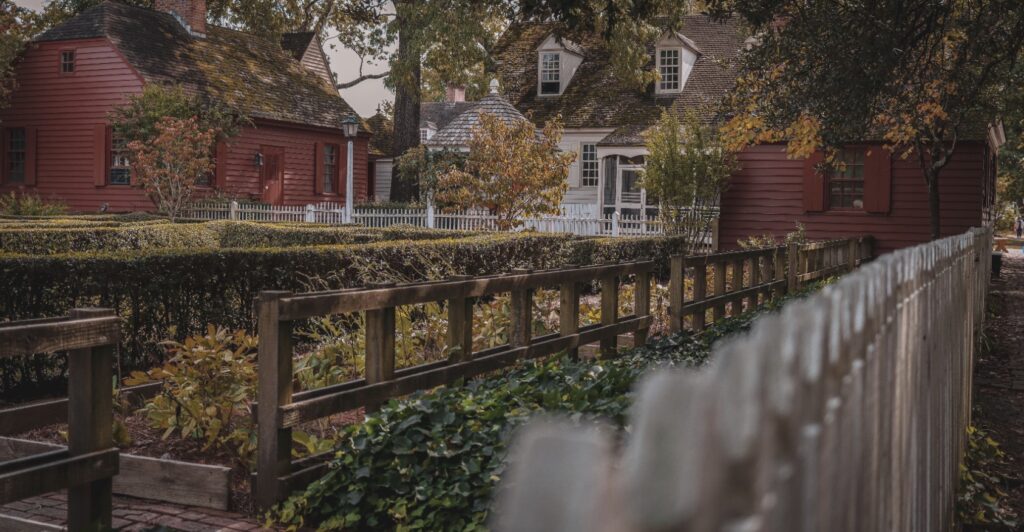
Castle Hill’s influence extended beyond household instruction. For readers familiar with the European salon tradition, Castle Hill, though neither Renaissance Florence nor Paris in scale or artistic patronage, nonetheless served as a center of influence, education, and political networking in colonial Virginia. There, mentorship, land speculation, and frontier policy converged within a single household, shaping careers and directing expansion in ways distinctly Medici-like. The comparison is less fanciful than it first appears. Virginia’s political generation consciously drew upon classical and Renaissance ideals. In the decade to come, Continental officers in the American Revolution encampments would stage performances celebrating Cato the Younger as a model of republican virtue; Thomas Jefferson would pursue architectural and intellectual inspiration rooted in Renaissance humanism; and figures such as Philip Mazzei would move easily between European intellectual circles and American political life. Within that world, Castle Hill operated as a provincial but powerful node of patronage and instruction.
Anglo-American audiences long displayed a fascination with captivity and “raised among Indians” narratives, stories blending fear, curiosity, and admiration for survival beyond the boundaries of colonial society. Family tradition later placed Tomey Ingles at Castle Hill among Virginia’s rising political generation, recalling encounters with figures such as Patrick Henry and James Madison, and even violin lessons alongside Thomas Jefferson — memories that reflect as much the later reputation of Walker’s estate as the remarkable circumstances of Ingles’s return.
Fincastle County Militia
In the years following Mary Draper Ingles’s return, William Ingles emerged not simply as a settler rebuilding a household but as a man increasingly tied to the logistical networks sustaining Virginia’s western defenses. The family remained closely connected with Colonel William Preston, the principal organizer of the region’s militia system and supply infrastructure. Preston later purchased the land where Draper’s Meadows once stood, establishing Smithfield roughly a mile from the site of the 1755 massacre.
While Preston functioned as the frontier’s logistical architect, operational field command during the 1774 crisis fell to Fincastle County’s Sheriff William Christian. A veteran of earlier campaigns against the Cherokee and a former member of the House of Burgesses before its dissolution by Lord Dunmore, Christian commanded the county’s militia as tensions escalated along the Ohio.
In 1774, Thomas (“Tomey”) Ingles, alongside his father Major William Ingles, supported the Fincastle militia through the provision of supplies essential to frontier defense. Warfare on Virginia’s borderlands depended as much upon flour barrels and ferry crossings as upon rifles and militia musters.
September 1774 correspondence from James Robertson reveals Tomey operating within Preston’s defensive network when he clashed with frontiersmen at Greasey Creek—men who appear either to have resisted provisioning obligations or interfered with the movement of supplies. Such figures occupied the unstable margins of frontier society, unwilling to subordinate personal interest to collective security. Robertson reported that after the confrontation, the men had “gone to the mountains for fear,” invoking a familiar refuge for those seeking to evade militia duty or county authority.[8]
By September, the long-anticipated campaign against the Shawnee commenced. Although leaders such as Cornstalk had sought to restrain violence through diplomacy, retaliatory bloodshed along the Ohio had overtaken efforts at conciliation. Fincastle County and the southern independent companies assembled at Camp Union under Colonel Andrew Lewis. They were to convene with the forces of Lord Dunmore at the mouth of the Scioto, the same location that Mary Ingles Draper and her sons were taken to following their capture. Assigned to the rear of the column, Fincastle’s regiment guarded the baggage and provisions as the army marched westward.
Lewis directed the column toward the mouth of the Elk River, near present-day Charleston, where the army constructed canoes to transport its flour stores down the Kanawha. Major Ingles, accompanied by his son Lieutenant Thomas Ingles—commissioned earlier that May—participated in this logistical transition from overland march to river movement.
Conclusion
Lewis’s force never reached the Scioto. The decisive clash would occur not in Shawnee towns but at the confluence of the Kanawha and Ohio—a location far closer to Virginia’s settlements than anyone anticipated. That confrontation will be examined in the next installment.
The Ingles family lived at a crossroads of currents, suspended between the demands of survival and the ambitions of empire. On 20 January 1775 William Ingles joined the freeholders of Fincastle County—including William Preston, William Russell, William Christian, and Arthur Campbell—in signing a formal protest against Parliament’s encroachments, declaring that should Britain refuse “pacific measures,” Virginians would not surrender their liberties. Yet after the Revolution, he would face accusations of Tory sympathy and spend his remaining years beneath a lingering cloud of suspicion until he died in 1782.[9]
The following year, violence returned to the family. Tomey Ingles was working a field near his cabin in Burke’s Garden while his wife, Eleanor, whom he had met during his four years at Castle Hill, tended to their three children. In a tragic echo of 1755, raiders struck, recalling the attack on Draper’s Meadows nearly two decades earlier. Eleanor and the children were caught much as Mary Draper had once been; the youngest, Rhoda, was just two years old—the same age George Ingles had been at the time of his capture.
Upon discovering the attack, Tomey enlisted fellow settlers, including Thomas Maxwell, and gave pursuit. The chase ended in bloodshed: Maxwell and the Ingles’ son, Matthew, were killed. Eleanor survived a tomahawk wound to the head, but one daughter succumbed to her injuries days later. Rhoda, the youngest, was recovered unharmed.
Nearly twenty years separated Draper’s Meadows from Burke’s Garden, yet the distance between them proved far smaller than memory allowed. Forts had risen, treaties had been signed, and militias marched beneath new banners, but the frontier remained governed by the same uncertainties that had shaped Mary Draper Ingles’s captivity. For families like the Ingleses, survival did not mark an ending but a repetition. Empire advanced westward, yet violence continued to bind generations to a struggle neither victory nor settlement seemed able to resolve.

Notes & Citations:
[1] Ryan S. Mays, “The Draper’s Meadows Settlement (1746–1756), Part I: George Draper and Family,” The Smithfield Review 18 (2014): 25, accessed February 22, 2026, https://vtechworks.lib.vt.edu/server/api/core/bitstreams/e83a8210-0318-494f-a5d3-e1fc65f70545/content.
[2] John Ingles, The Narrative of Colonel John Ingles Relating to the Capture and Escape of Mary Draper Ingles, written ca. 1824, manuscript transcription, University of Virginia Special Collections (modern transcription accessed via Scribd), https://www.scribd.com/document/420147907/1824-John-Ingles-s-Narrative-of-Mary-Draper-Ingles-s-Mid-18th-c-Captivity-and-Escape.
[3] Joseph A. Waddell. “Indian Wars in Augusta County, Virginia.” The Virginia Magazine of History and Biography 2, no. 4 (1895): 397–404. http://www.jstor.org/stable/4241848.
[4] Ingles, The Narrative of Colonel John Ingles Relating to the Capture and Escape of Mary Draper Ingles
[5] John P. Hale, Trans-Allegheny Pioneers: Historical Sketches of the First White Settlements West of the Alleghenies, 1748 and After (Cincinnati: The Graphic Press, 1886), 119, accessed via Internet Archive, https://archive.org/details/transalleghenypi00hale/page/118/mode/2up.
[6] Duties drawn from supply requisitions published by https://founders.archives.gov.
[7] Alexander Canaday McLeod, “A Man for All Regions: Dr. Thomas Walker of Castle Hill,” Filson Club History Quarterly 71, no. 2 (April 1997): 177, Filson Historical Society PDF
[8] Reuben Gold Thwaites and Louise Phelps Kellogg, eds., Documentary History of Dunmore’s War, 1774, Draper Series (Madison: Wisconsin Historical Society, 1905), 179.
[9] Thwaites and Kellogg, Documentary History of Dunmore’s War, 101. The Roanoke Times (Roanoke, VA), February 23, 2017, 81. Accessed March 1, 2026. Newspapers.com.
Leave a Reply